
ASME B16.5 controls the flange geometry and rating conversation; it does not replace the purchase material standard. A complete alloy flange RFQ still needs the material route, such as ASTM B564 for nickel alloy forgings or ASTM A182 for stainless and duplex forgings, plus class, facing, bore, quantity, inspection, and certification.
Standards intelligence / engineers / 9 min
ASME B16.5 Flange Guide for Alloy Piping Procurement
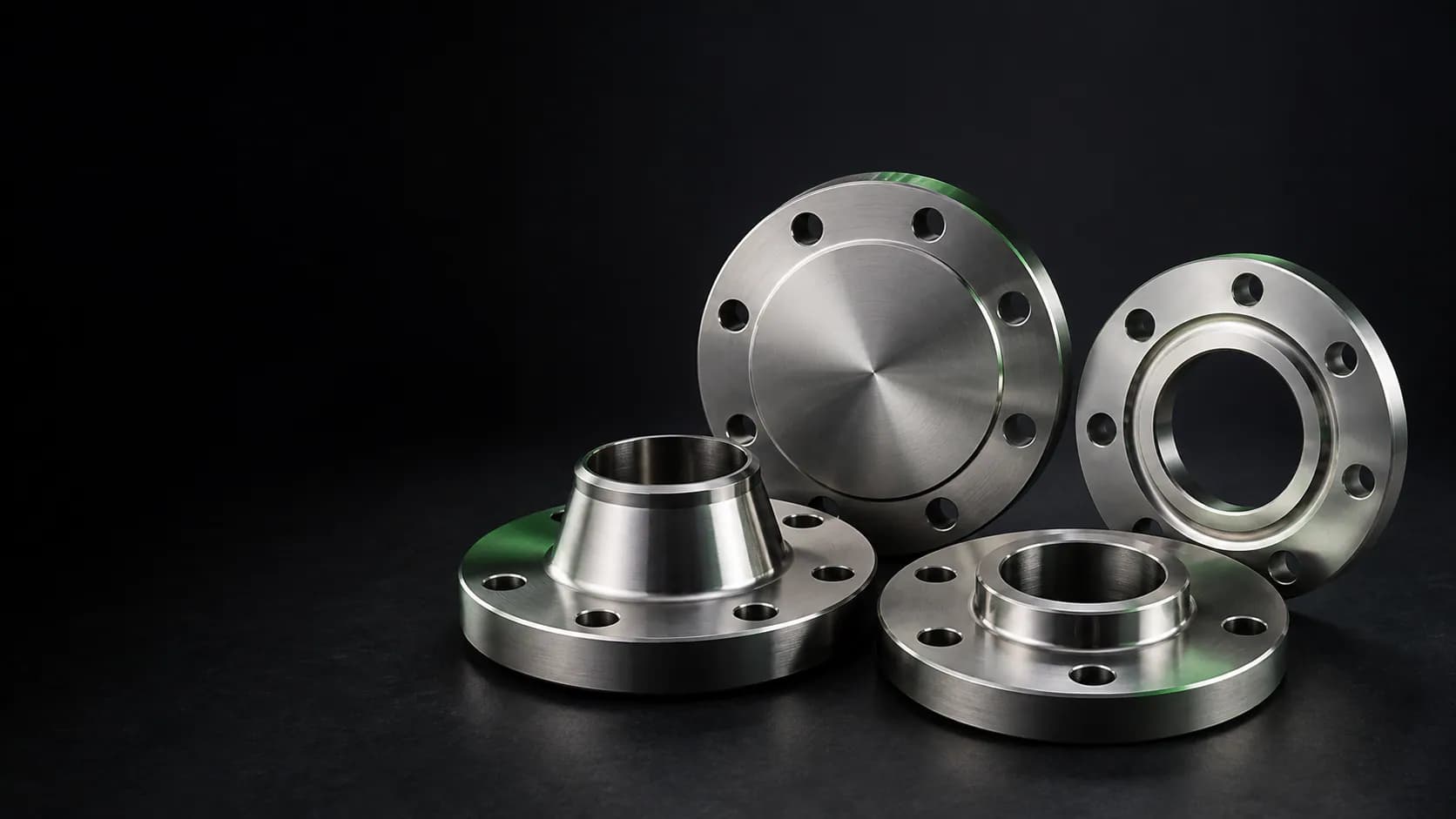
ASME B16.5 is one of the most important flange standards for alloy piping buyers because it frames pressure-temperature ratings, materials, dimensions, tolerances, marking, testing, and opening requirements for common forged and cast flange supply. RTI uses this guide to separate dimensional authority from material-standard selection, inspection control, and final document release.
Engineering explanation
Written as a specification aid, not a generic article.
The guide keeps standards, material selection, inspection, and commercial release in separate lanes so buyers can issue a cleaner technical RFQ.
The standard is especially useful for procurement because it gives a common language for WNRF, WNRTJ, SORF, blind, socket weld, threaded, lap joint, and related flange forms. When a buyer only states an alloy grade and nominal size, RTI still needs pressure class, facing, schedule or bore, and the project piping class before a serious quotation can be released.
Technical diagram
ASME B16.5 RFQ control path
Step 01
Material
Select ASTM/ASME product route before quoting.
Step 02
NPS
Confirm nominal pipe size and pipe OD basis.
Step 03
Class
State pressure class and service design basis.
Step 04
Facing
Define RF, RTJ, FF, or special gasket surface.
Step 05
Documents
Attach PMI, MTC, TPI, marking, and packing needs.
Specification table
Structured control points for engineering and procurement.
The table is intentionally compact: it summarizes the decision points RTI needs before a commercial offer becomes technically meaningful.
| Engineering point | Controlled guidance | Procurement implication |
|---|---|---|
| Dimensional role | Controls dimensions, tolerances, pressure-temperature ratings, marking, testing, and openings. | Use it with, not instead of, the ASTM/ASME material standard. |
| Size boundary | Applies to NPS 1/2 through NPS 24, with Class 2500 listed through NPS 12. | For larger flanges, check ASME B16.47 or a drawing route. |
| Class identity | Class 150 to 1500 are common B16.5 class designations; Class 2500 has narrower size coverage. | Class must be stated with facing and bore; NPS alone is not enough. |
| Joint system | Raised face and ring type joint requirements are commercial and engineering decisions. | RF/RTJ affects gasket, bolting, machining, inspection, and packing. |
| Material link | B16.5 identifies dimensional requirements while material conformance comes from ASTM/ASME material specifications. | List UNS number, material standard, grade, and MTC type in the RFQ. |
Application examples
Where this guide changes the buying conversation.
Examples show quotation contexts, not universal approvals. The project specification remains the governing document.
Buyer and procurement implications
The commercial consequences of the engineering detail.
Each point is written for quotation discipline: what to state, what to avoid, and what to hold for engineering or inspection review.
Quote readiness
A B16.5 RFQ should include NPS, class, facing, bore or schedule, material standard, quantity, inspection documents, and delivery destination.
Avoid standard confusion
Do not use ASME B16.5 as the only standard. It is usually paired with a material standard such as ASTM B564 or ASTM A182.
Large diameter gate
For NPS above the B16.5 boundary, ask whether ASME B16.47, MSS, EN, or a project drawing governs.
Document discipline
MTC, PMI, TPI, marking photos, and packing requirements should be specified before commercial comparison.
Engineering FAQs
Practical questions on ASME B16.5 Flange Guide.
Answers are intentionally tied to standards, documents, and RFQ data rather than loose sales copy.
Related materials
Continue the material-selection path.
Related links are deliberately narrow so the knowledge centre supports engineering choices instead of spraying pages.
Related products
Move from knowledge to line-item definition.
Product links connect the technical guide to controlled commercial pages and the RFQ intake.
Contextual RFQ
Need B16.5 alloy flanges quoted cleanly?
Send RTI the material route, NPS, pressure class, facing, bore, testing, documents, and destination so the offer can be built around your piping class.