
ASTM B366 covers factory-made wrought nickel alloy fittings, including butt-welding and socket-welding parts such as elbows, tees, reducers, caps, and stub ends. It also identifies class designations that matter because welded construction and nondestructive examination requirements change the commercial and inspection route.
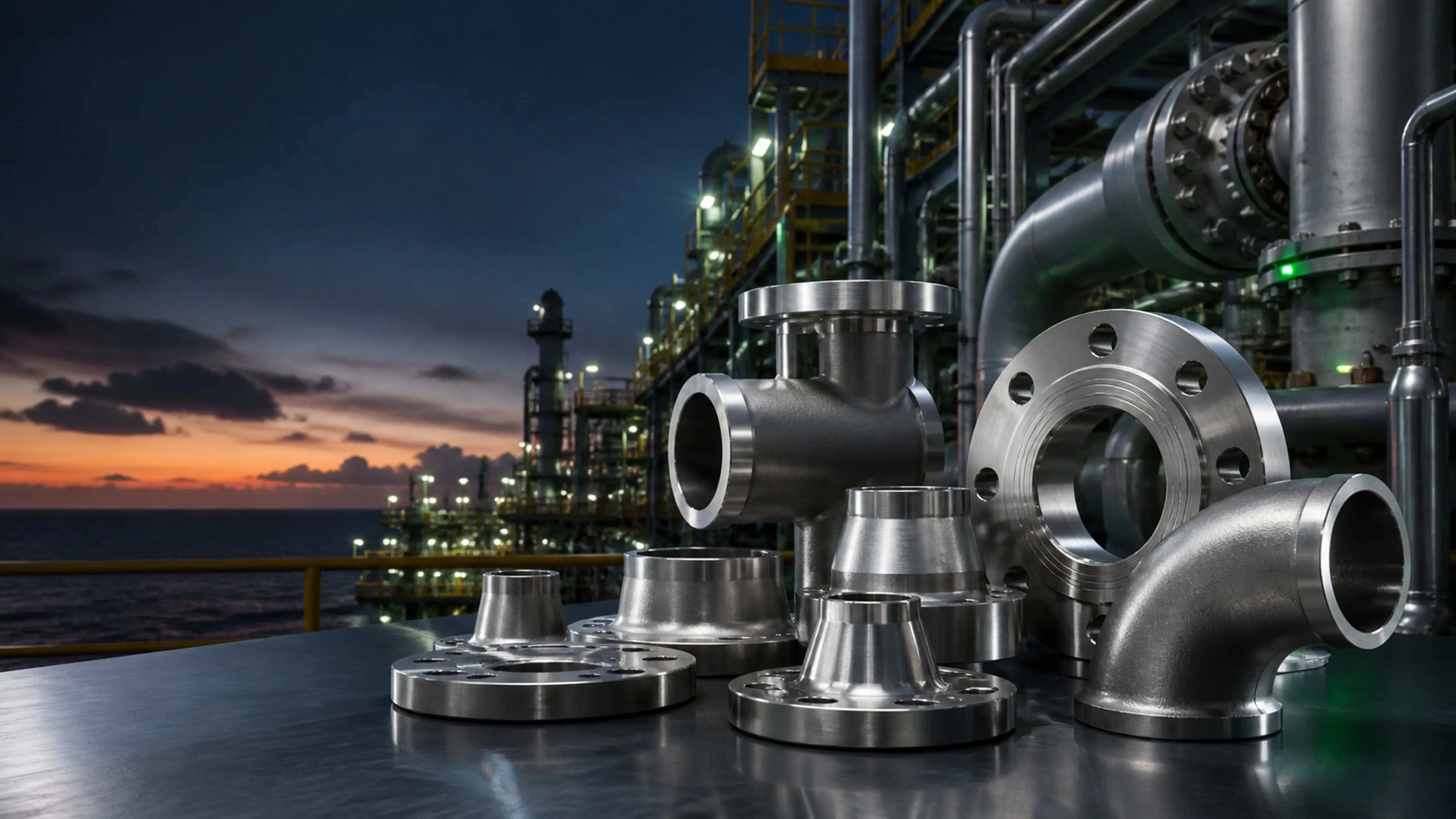
Standards intelligence / quality / 8 min
ASTM B366 Nickel Alloy Pipe Fittings Guide
ASTM B366 / B366M is central to nickel alloy fitting procurement because it covers factory-made wrought nickel alloy pressure piping fittings. RTI uses this guide to connect fitting form, UNS grade, ASME B16.9 dimensional route, construction class, NDE expectations, PMI, MTC, and third-party inspection into one buyer-ready RFQ sequence.
Engineering explanation
Written as a specification aid, not a generic article.
The guide keeps standards, material selection, inspection, and commercial release in separate lanes so buyers can issue a cleaner technical RFQ.
For RTI, B366 sits beside ASME B16.9 rather than replacing it. The buyer should state the material standard and UNS number, then define the fitting geometry, schedule or bore, construction class, dimensional standard, PMI, MTC type, NDE records, packing, and destination.
Technical diagram
ASTM B366 fitting release logic
Step 01
UNS
Identify N06625, N10276, N08825, or project grade.
Step 02
Fitting form
Select elbow, tee, reducer, cap, stub end, or forged fitting.
Step 03
Class
Confirm Class S, W, WX, or WU when applicable.
Step 04
Dimensions
Pair with B16.9, B16.11, MSS, or drawing route.
Step 05
Dossier
Release with MTC, PMI, NDE, marking, TPI, and packing records.
Specification table
Structured control points for engineering and procurement.
The table is intentionally compact: it summarizes the decision points RTI needs before a commercial offer becomes technically meaningful.
| Engineering point | Controlled guidance | Procurement implication |
|---|---|---|
| Scope | Factory-made wrought nickel alloy fittings for pressure piping. | Use for nickel alloy elbows, tees, reducers, caps, and stub ends. |
| Class designations | Class S, W, WX, and WU are used for construction/NDE distinctions. | RFQ should name the class when the project requires it. |
| Hydrostatic wording | The ASTM source summary states hydrostatic testing is not required by this specification. | If hydrotest is needed, state it as a project requirement. |
| Dimensional pairing | B366 is not a complete dimensional standard. | Pair with ASME B16.9, ASME B16.11, MSS, or drawing requirements. |
| Inspection release | Visual, dimensional, PMI, NDE, and certificate requirements should be agreed before dispatch. | Prevents disagreement after goods are manufactured. |
Application examples
Where this guide changes the buying conversation.
Examples show quotation contexts, not universal approvals. The project specification remains the governing document.
Buyer and procurement implications
The commercial consequences of the engineering detail.
Each point is written for quotation discipline: what to state, what to avoid, and what to hold for engineering or inspection review.
Class is not decoration
The selected B366 class affects welded construction and NDE expectations; it should be specified, not guessed.
Hydrotest clarity
When a buyer needs hydrostatic testing, it should be explicitly requested because the ASTM summary says it is not required by the specification.
Wall matching
Schedule, bore, end prep, and pipe match must be stated for clean fit-up and commercial comparison.
Lot traceability
Request heat number marking and an MTC that connects the finished fitting to material and manufacturing records.
Engineering FAQs
Practical questions on ASTM B366 Guide.
Answers are intentionally tied to standards, documents, and RFQ data rather than loose sales copy.
Related materials
Continue the material-selection path.
Related links are deliberately narrow so the knowledge centre supports engineering choices instead of spraying pages.
Related products
Move from knowledge to line-item definition.
Product links connect the technical guide to controlled commercial pages and the RFQ intake.
Inconel 625 Pipe FittingsCommercial RFQ page for UNS N06625 wrought and forged fittings.Product Capability CentreFlange and pipe fitting capability architecture for alloy component combinations.Request Technical QuotationStructured RFQ intake for material, standard, dimensions, testing, and documents.
Contextual RFQ
Send a B366 fitting RFQ with the class defined
Include UNS grade, fitting type, size sequence, schedule, B366 class, dimensional standard, PMI, MTC, NDE, and destination.