
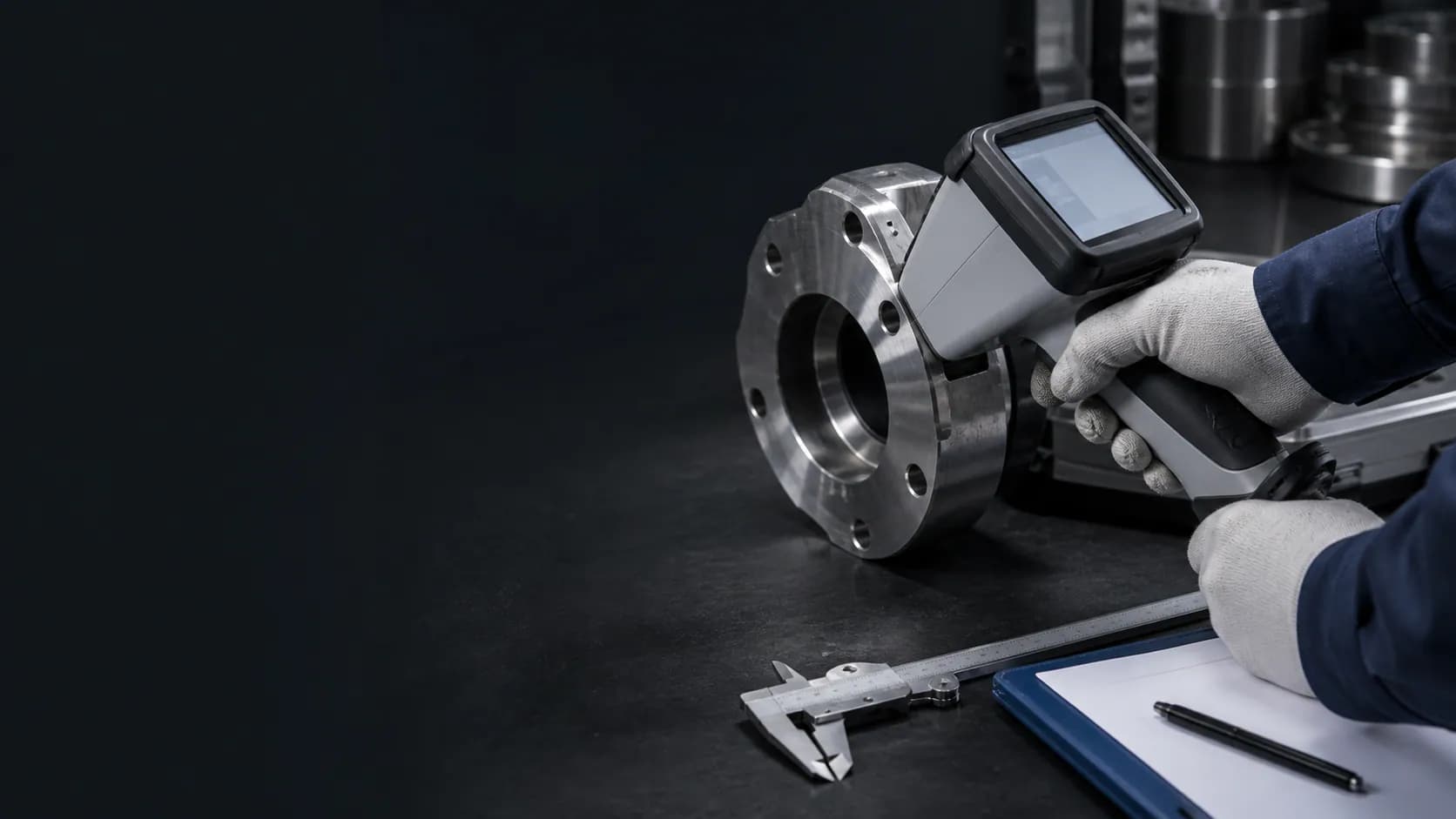
PMI is a nondestructive metals identification and grade-verification practice used to reduce substitution and mix-up risk. It is especially valuable when visually similar alloy components have very different service limits, such as 316L, duplex 2205, super duplex 2507, Inconel 625, C276, and 825.
Inspection and documentation / quality / 7 min
PMI Testing Guide for Alloy Flanges and Pipe Fittings
Positive Material Identification helps buyers reduce grade mix-up risk in alloy projects, especially where nickel alloy, duplex, super duplex, and stainless steel items are purchased together. RTI uses PMI as a verification tool that supports, but does not replace, MTC review, traceability, inspection planning, and project material acceptance.
Engineering explanation
Written as a specification aid, not a generic article.
The guide keeps standards, material selection, inspection, and commercial release in separate lanes so buyers can issue a cleaner technical RFQ.
A good PMI requirement defines what will be tested, which elements or grade bands are expected, how results are recorded, and how nonconforming items are segregated. RTI should connect PMI results to heat number, marking, MTC review, packing, and the final inspection dossier.
Technical diagram
PMI control loop
Step 01
Scope
Define percentage or item-level PMI before order release.
Step 02
Method
Select suitable identification method for the alloy and elements.
Step 03
Record
Capture item, heat, mark, result, operator, and instrument reference.
Step 04
Reconcile
Compare PMI results with MTC and ordered UNS grade.
Step 05
Release
Attach PMI report to the document pack.
Specification table
Structured control points for engineering and procurement.
The table is intentionally compact: it summarizes the decision points RTI needs before a commercial offer becomes technically meaningful.
| Engineering point | Controlled guidance | Procurement implication |
|---|---|---|
| Role | Nondestructive identification, verification, and sorting of metals. | Use to reduce grade mix-up risk before dispatch. |
| Scope wording | Can be lot-based, item-based, or percentage-based depending on project risk. | State the required extent at RFQ stage. |
| Method boundary | Different PMI methods have different element detection strengths and limitations. | Method should suit the alloy and acceptance criteria. |
| MTC relationship | PMI verifies identity signals; the MTC carries heat chemistry and mechanical results. | Review both documents together. |
| Nonconformance | Unexpected PMI results require segregation and document review. | Do not release a shipment until the mismatch is resolved. |
Application examples
Where this guide changes the buying conversation.
Examples show quotation contexts, not universal approvals. The project specification remains the governing document.
Buyer and procurement implications
The commercial consequences of the engineering detail.
Each point is written for quotation discipline: what to state, what to avoid, and what to hold for engineering or inspection review.
Define extent
A PMI request should say 100%, random, lot-based, or item-based; ambiguous PMI wording causes release disputes.
Specify acceptance basis
The buyer should state expected grade/UNS identity and any project acceptance criteria.
Keep MTC primary
PMI confirms alloy identity signals but does not prove every mechanical property or heat-treatment requirement.
Tie to marking
PMI reports should identify items in a way that matches tags, heat numbers, line items, and packing lists.
Engineering FAQs
Practical questions on PMI Testing Guide.
Answers are intentionally tied to standards, documents, and RFQ data rather than loose sales copy.
Related materials
Continue the material-selection path.
Related links are deliberately narrow so the knowledge centre supports engineering choices instead of spraying pages.
Related products
Move from knowledge to line-item definition.
Product links connect the technical guide to controlled commercial pages and the RFQ intake.
Contextual RFQ
Add PMI to your alloy RFQ
Tell RTI the required PMI extent, method expectation, certificate type, TPI requirement, and shipment destination at enquiry stage.