
Hastelloy C276 / UNS N10276 is a wrought nickel-chromium-molybdenum material used where chemical process corrosion, chloride-bearing media, and sour oilfield environments demand a stronger alloy position than common austenitic stainless grades.
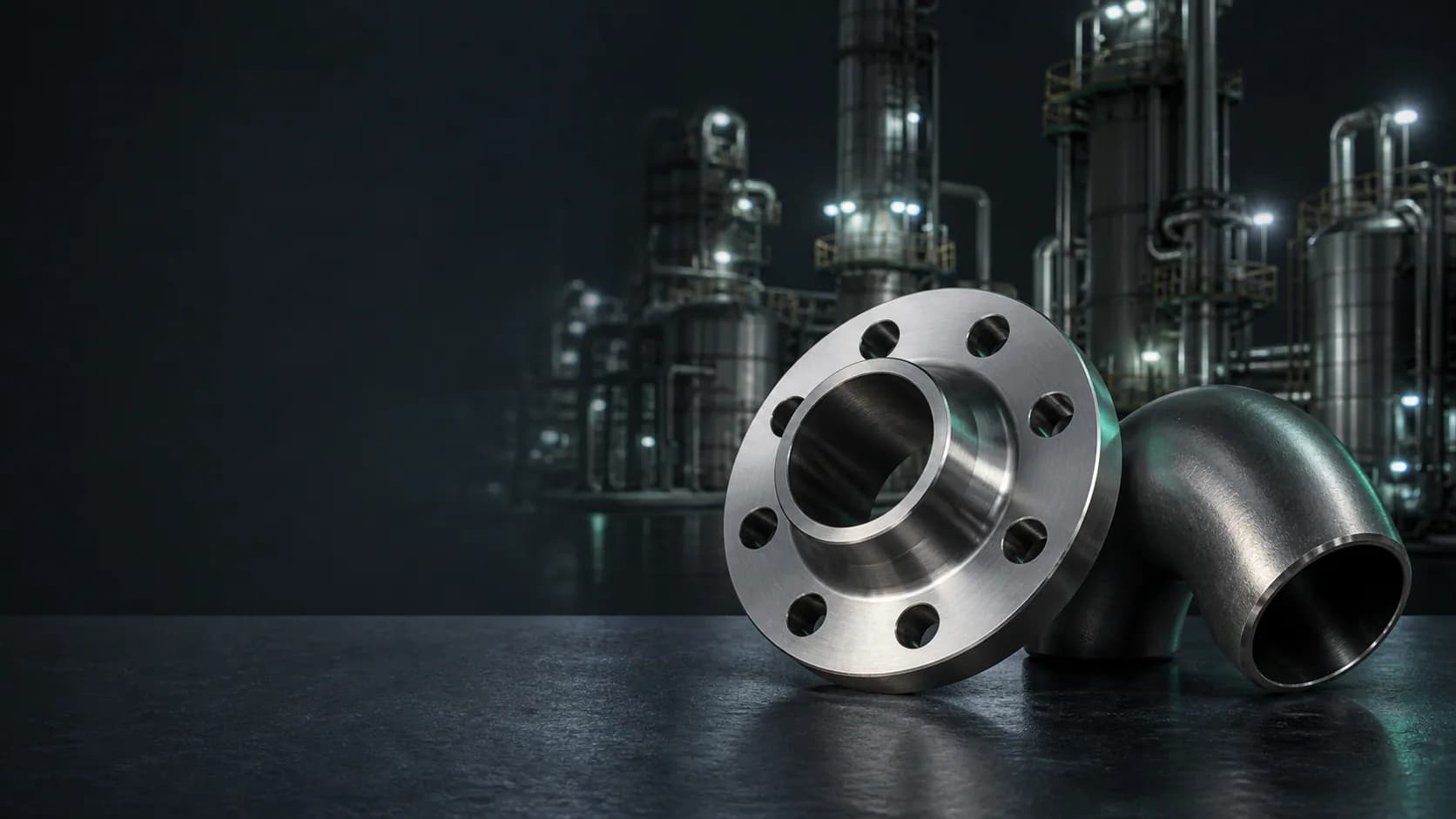
Hastelloy C276 / Flanges / UNS N10276
Hastelloy C276 Flanges Manufacturer & Exporter
Raymond Tube Industries manufactures, supplies, and exports Hastelloy C276 / UNS N10276 flanges to ASTM B564 / ASME SB564 for chemical-process and corrosion-critical piping requirements. Buyers can specify weld neck, slip-on, blind, socket weld, threaded, lap joint, long weld neck, or drawing-based forms together with NPS, class, bore or schedule, RF or RTJ facing, inspection, documentation, packing, quantity, and destination.
Material description
Hastelloy C276 material and product scope.
Start with material identity, then define the flange or fitting form, dimensions, inspection, documentation, and packing requirements for quotation.
For flange procurement, the key commercial risk is not simply naming C276. The RFQ must connect UNS N10276, ASTM B564 / ASME SB564 forgings, ASME B16.5 dimensions, pressure class, facing, bore, heat treatment, PMI, NACE review, and document release.
Lot-specific chemistry, mechanical results, and code acceptance must be confirmed against the MTC and approved project specification before order release.
| Specification | Verified value | Unit |
|---|---|---|
| ASTM standard | ASTM B564 for nickel alloy forgings | - |
| ASME material standard | ASME SB564 | - |
| UNS | N10276 | - |
| Sizes | ASME B16.5 reference scope: NPS 1/2 through NPS 24; larger flanges require ASME B16.47 or drawing review | - |
| Pressure classes | Class 150, 300, 400, 600, 900, 1500; Class 2500 within B16.5 size limits | - |
| Schedule / bore | Buyer to specify pipe schedule, bore, hub details, weld-end preparation, and any drawing revision | - |
| Facing | RF and RTJ where compatible with the selected flange type and pressure class | - |
| Dimensional standards | ASME B16.5, ASME B16.47 review, ASME B16.36 for orifice flange packages | - |
Sizes and configuration
Open the dimensional table that matches the buying decision.
The full reference tables remain available for engineering review. Start with the size family and dimensional standard that apply to the RFQ.
Product forms
Flange forms for specification-led buying.
Every form is a quotation signal: it controls standard selection, dimensional review, inspection, packing, and the drawing or piping-class details needed before offer.
WNRF
Weld neck raised face flanges for butt-welded piping where bore, schedule, and pressure class must align.
WNRTJ
Weld neck ring type joint flanges for RTJ gasketed joints in higher-integrity pressure service.
SORF
Slip-on raised face flanges where project specifications permit fillet-welded slip-on construction.
BLRF
Blind raised face flanges for line isolation, nozzle closures, and test-boundary requirements.
BLRTJ
Blind ring type joint flanges where the selected pressure class and gasket system require RTJ geometry.
Socket Weld
Socket-weld flanges for small-bore lines when allowed by the piping class and owner specification.
Threaded
Threaded flanges for non-welded connections where service, pressure, and code rules permit threads.
Lap Joint
Lap joint flanges used with stub ends where rotation and alignment flexibility are required.
Long Weld Neck
Long weld neck flanges for vessel nozzles, thick-wall transitions, or engineered drawing-based supply.
Orifice
Orifice flange packages requiring ASME B16.36 review, tap details, class, facing, plugs, and documentation.
Dimensional standards
Size, class, facing, schedule, and bore are separate commercial decisions.
The page presents standards as quotation routes. The final offer must follow the buyer's piping class, drawing, and approved dimensional basis.
Primary flange dimensions
ASME B16.5 for NPS 1/2 through NPS 24 flanges within the listed class coverage
Large diameter review
ASME B16.47 or drawing-based route to be confirmed before quotation for sizes beyond B16.5
Orifice packages
ASME B16.36 review for pressure taps, class limits, facing, and plug details
Chemical composition
Published chemistry reference.
Use the material test certificate and ordered standard to confirm the chemistry of the delivered product.
| Element | Verified composition | Basis |
|---|---|---|
| Nickel | 57 balance | Weight % |
| Cobalt | 2.5 max | Weight % |
| Chromium | 16 | Weight % |
| Molybdenum | 16 | Weight % |
| Iron | 5 | Weight % |
| Tungsten | 4 | Weight % |
| Manganese | 1 max | Weight % |
| Vanadium | 0.35 max | Weight % |
| Silicon | 0.08 max | Weight % |
| Carbon | 0.01 max | Weight % |
| Copper | 0.5 max | Weight % |
Mechanical properties
Mechanical data with product-form context.
The table avoids undocumented product guarantees. Final conformance is tied to ASTM/ASME route and certificate review.
| Condition | 0.2% yield strength | Ultimate tensile strength | Elongation |
|---|---|---|---|
| Sheet at room temperature, 0.078 in / 2 mm | 356 MPa / 51.6 ksi | 792 MPa / 114.9 ksi | 61% |
| Sheet at 400 deg F / 204 deg C, 0.078 in / 2 mm | 290 MPa / 42.0 ksi | 694 MPa / 100.6 ksi | 59% |
| Sheet at 600 deg F / 316 deg C, 0.078 in / 2 mm | 248 MPa / 35.9 ksi | 681 MPa / 98.8 ksi | 68% |
| Sheet at 800 deg F / 427 deg C, 0.078 in / 2 mm | 225 MPa / 32.7 ksi | 650 MPa / 94.3 ksi | 67% |
Applications and corrosion considerations
A commercial page with engineering discipline underneath.
Applications help qualify the enquiry, while corrosion notes flag the review questions that must be resolved before substitution or service approval.
Chemical process reactors
Acid process piping
Pollution-control systems
Sour oilfield service requiring review
Chloride-bearing process lines
Heat exchanger connections
Severe corrosion maintenance spares
Mixed oxidizing and reducing media
Chloride-bearing media
Haynes positions C276 with exceptional resistance to chloride stress corrosion cracking plus outstanding pitting and crevice resistance in chloride and halide environments.
Acid service
High chromium and molybdenum content supports resistance in both oxidizing and nonoxidizing acid environments, but concentration, contamination, and temperature remain decisive.
Sour oilfield conditions
C276 is described as very resistant to sulfide stress cracking and stress corrosion cracking in sour oilfield environments; project NACE review remains required.
Fabrication effect
Cold work may affect stress corrosion cracking resistance, so re-annealing and fabrication history should be reviewed for critical flange packages.
Inspection, packing, documentation
Conversion depends on confidence at release.
The product page turns buyer concerns into explicit RFQ controls: PMI, MTC, TPI, NACE or IGC review, packing protection, and document release.
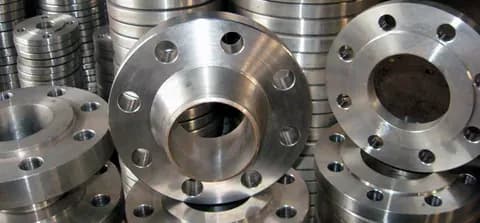
Genuine RTI evidence
Machined flange components
RTI component photography supporting machined-surface, form, bore, and final inspection planning. Material grade is confirmed through heat traceability and the agreed release documents, not visual appearance alone.
PMI
Positive Material Identification should be specified for critical alloy packages and mixed-grade shipments.
MTC
Material Test Certificates must connect heat number, material standard, chemistry, mechanical results, and marking.
TPI
Third-party inspection points should be agreed before manufacturing, machining, packing, or final release.
NACE
Sour-service acceptance is project-specific and must be reviewed against the selected material, condition, hardness, and environment.
Surface protection
Machined faces, gasket surfaces, threads, and bevel ends are protected according to the packing instruction.
Traceable marking
Heat numbers, grade, size, class, standard, and item tags should stay readable through packing and receipt.
Export packing
Wooden case, pallet, moisture barrier, separation, and destination marking requirements are captured at RFQ stage.
EN 10204 3.1
Specify inspection certificate type where the buyer requires manufacturer-issued lot traceability.
Dimensional record
Add dimensional inspection reports for machined flanges, RTJ grooves, bores, bevels, and fitting geometry where required.
Inspection dossier
PMI, MTC, TPI release, NDE, packing list, marking photos, and origin/export documents can be compiled into one dossier.
Commercial FAQs
RFQ questions for Hastelloy C276 Flanges.
Answers focus on the details procurement and engineering teams should define before requesting a quotation.
Related pages
Continue the buying path.
Compare related material grades, product forms, and engineering guidance before finalising the RFQ.
Nickel Alloy Flanges overviewReview the authoritative nickel alloy flanges product-family route.Inconel 625 flangesCompare alloy 625 flange supply against C276.Super Duplex S32750 flangesReview a high-strength stainless upgrade route.Technical guidesUse RTI's technical guide framework for inspection and documents.
Technical quotation
Have a requirement?
Send the material, size, class or schedule, quantity, and applicable specification. RTI's export team will receive the technical enquiry route.