
Engineered for Critical Industries. Trusted for Global Supply.
Raymond Tube Industries logoRaymond Tube IndustriesISO 9001:2015 Certified — Consistent Quality. Global Standards. Trusted Supply.
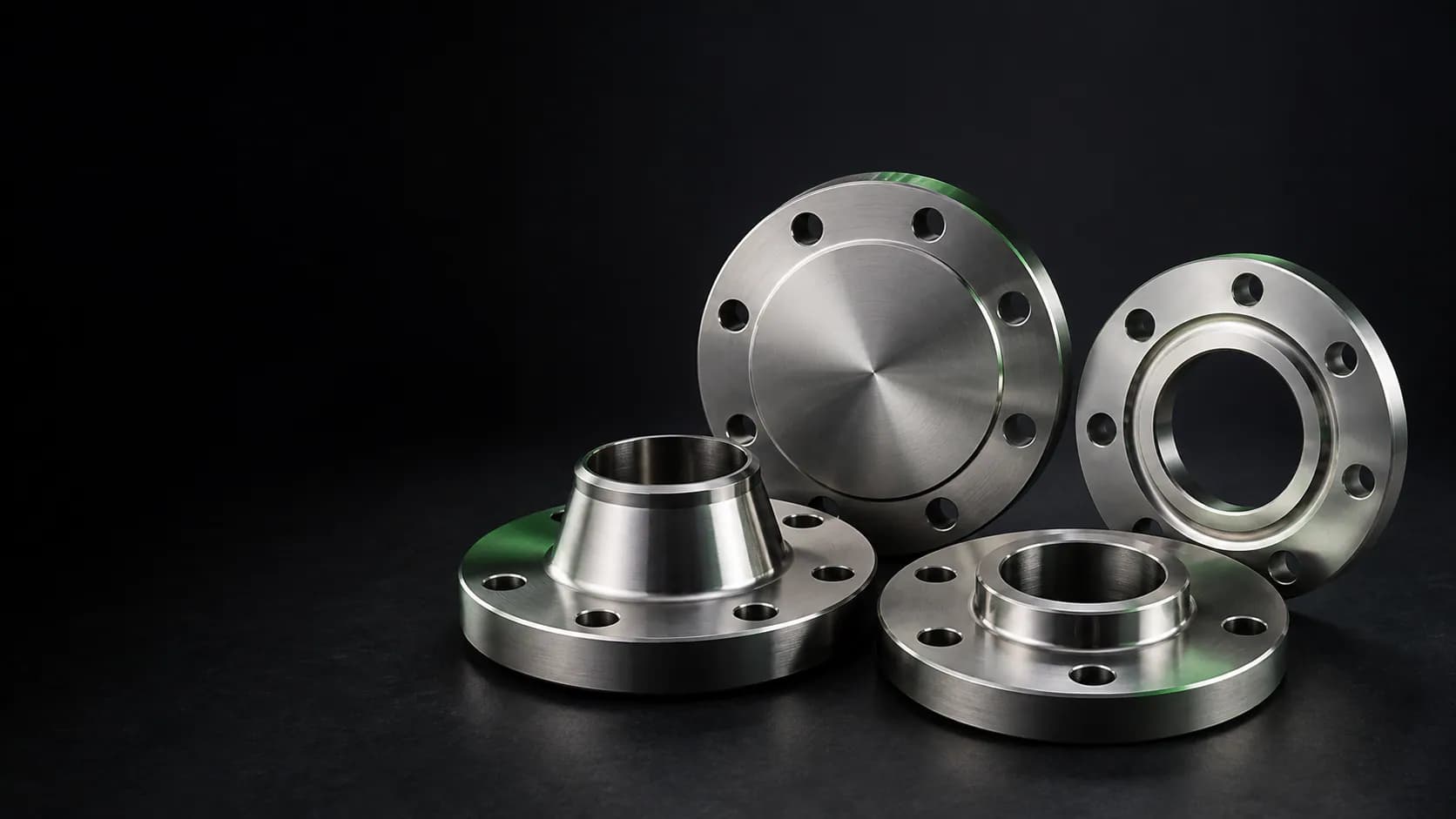
Illustrative machined Inconel 625 flange composition with weld neck, blind, and raised-face forms

Alloy flanges and fittings

Nickel Alloy Flanges Manufacturer & Exporter

Raymond Tube Industries manufactures and supplies nickel alloy flanges for demanding chemical, offshore, marine, energy, and process piping requirements. The grade route may include Inconel 625, Incoloy 825, Hastelloy C276, Monel 400, Alloy 20, or another approved nickel alloy. A technical quotation connects the exact grade and UNS designation to the forging specification, flange form, dimensional standard, NPS or DN, class, facing, bore, inspection, documentation, packing, and destination.

Technical snapshot

Key details for your specification.

Material family

Nickel, nickel-chromium, nickel-copper, and nickel-chromium-molybdenum alloy routes
Principal grade routes

Inconel 625, Incoloy 825, Hastelloy C276, Monel 400, Alloy 20, and specification-approved alternatives

Flange forms

WNRF, WNRTJ, SORF, blind, socket weld, threaded, lap joint, long weld neck, orifice, and drawing-based forms

Material specification

ASTM B564 / ASME SB564, ASTM B462 / ASME SB462, or another grade-appropriate forging route

Dimensional control

ASME B16.5, B16.47, B16.36, piping class, or approved drawing as applicable

Inspection

PMI, dimensions, RTJ groove, surface, NDE, TPI, and project-specific review where required

Documents

MTC / EN 10204 3.1, heat traceability, inspection reports, marking, and release dossier

Buyer input

Grade and UNS, flange form, size, class, facing, bore, standards, quantity, tests, documents, and destination

Engineering discussion

Context before component selection.

Nickel alloy is a family, not a complete specification

Inconel 625, Incoloy 825, Hastelloy C276, Monel 400, and Alloy 20 address different corrosion and service questions. State the exact grade, UNS designation, and product specification before defining the flange.

Connection geometry changes the procurement risk

Weld neck flanges require bore and hub review, RTJ flanges require groove control, blind flanges form pressure closures, and long weld neck or orifice items often depend on drawings and additional machining details.

Material and dimensional standards work together

The material specification controls the alloy forging route; the dimensional standard controls geometry, class, facing, and tolerances. Both belong on the RFQ, along with the applicable edition and project additions.

PMI and traceability protect high-value alloy packages

Define PMI coverage, heat-number continuity, marking, MTC review, dimensional records, NDE, TPI, and segregation before manufacture or release. The final lot evidence governs supplied material identity.

Commercial comparison requires equal scope

Compare quotations only after class, facing, bore, tests, inspection, documents, packing, quantity, Incoterm, and destination are aligned. Exclusions and substitutions should be visible before technical acceptance.

Standards and release

Define the basis, then document it.

Grade-specific forging standard

Confirm the ASTM or ASME product specification for the exact alloy and product form; ASTM B564 does not replace every grade-specific material route.

ASME B16.5

Common dimensional basis for applicable standard flanges, including pressure class, facing, tolerances, bolting dimensions, and marking.

ASME B16.47 / B16.36

Use the applicable large-diameter or orifice-flange standard only when the ordered configuration falls within its scope.

Project quality specification

NACE, heat treatment, hardness, NDE, PMI, TPI, cleaning, and documentation are project-specific requirements rather than automatic alloy claims.

Related application

Data center cooling systems

Review how water chemistry, cooling architecture, equipment interfaces, inspection, and documentation shape stainless and duplex component RFQs.

Open engineering hub

Buyer questions

Frequently asked questions.

Which nickel alloy flange grades are covered by this route?

The principal routes include Inconel 625, Incoloy 825, Hastelloy C276, Monel 400, and Alloy 20, subject to the approved project specification.

Does ASTM B564 apply to every nickel alloy flange?

No. The material-product standard must be confirmed for the exact grade and ordered form; some alloys use another ASTM or ASME route.

Can RF and RTJ nickel alloy flanges be requested?

Yes, where compatible with the flange form, pressure class, gasket system, dimensional standard, and project specification.

Why is PMI commonly specified for nickel alloy flanges?

PMI helps verify grade identity and segregation in high-value or mixed-alloy packages, but its scope and acceptance method should be stated.

Is NACE compliance automatic for nickel alloy flanges?

No. Sour-service acceptance depends on the environment, material condition, hardness, product route, and project-specific requirements.

What should be checked on the MTC?

Check grade and UNS, heat number, product specification, chemistry, mechanical results, heat treatment where applicable, and traceability to marking.

What information is required for a nickel alloy flange quotation?

Provide grade and UNS, flange form, size, class, facing, bore or schedule, standards, quantity, tests, documents, packing, and destination.

Technical quotation

Turn this guidance into a controlled request.

Capture the material, product form, dimensions, standard, inspection, documentation, packing, and destination requirements for review.

Technical quotation desk

Have a Technical Requirement?

Send us your material grade, size, class or schedule, quantity, and specification.