Engineering context
Cooling infrastructure starts with the circuit, not the alloy name.
Define the operating system, water chemistry, equipment interfaces, dimensional standard, and release documentation before selecting the component route.
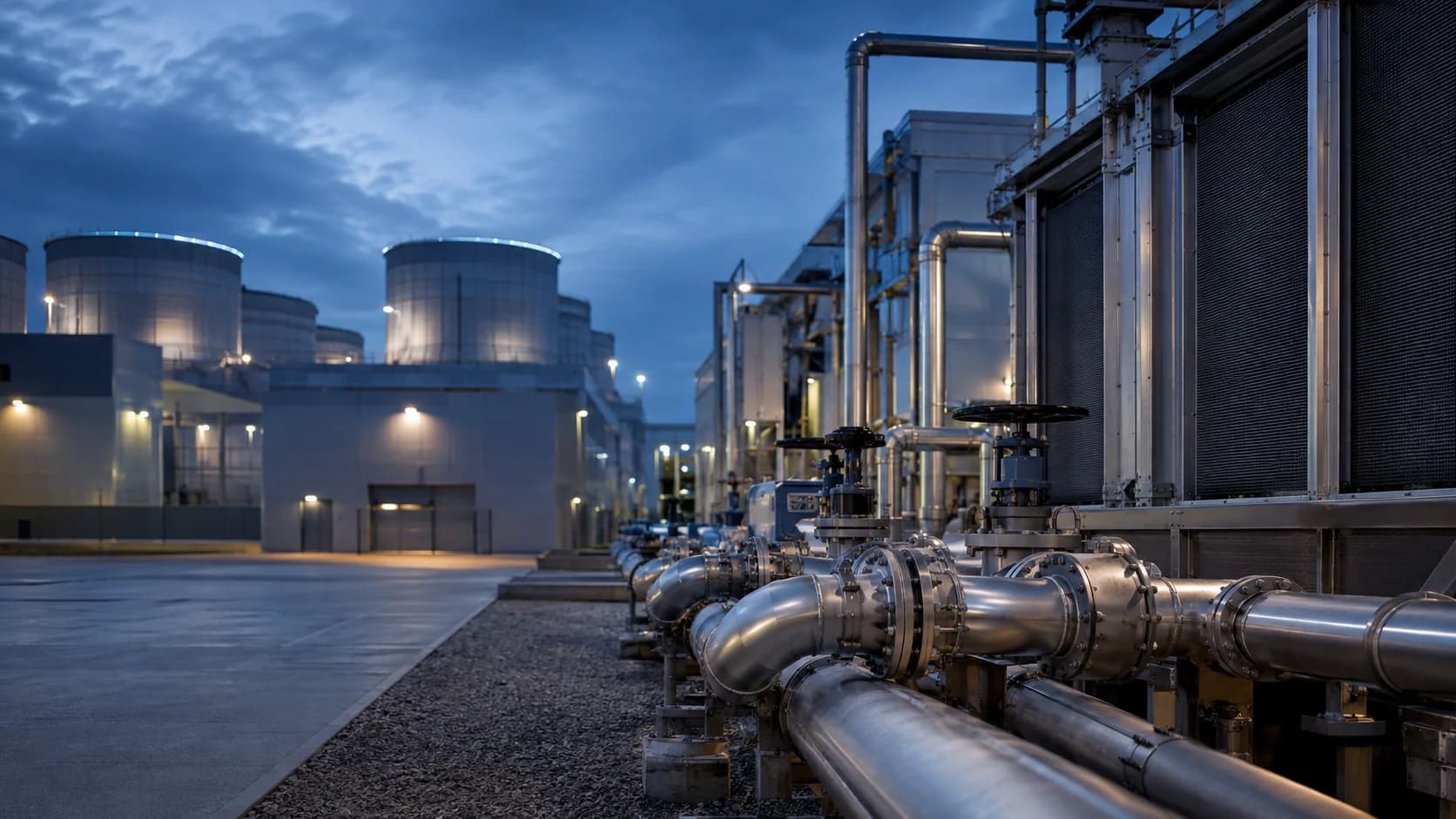
Data-center thermal management depends on mechanical systems that move heat reliably from IT halls to chillers, heat exchangers, cooling towers, dry coolers, or other heat-rejection equipment. Flanges and fittings sit at equipment nozzles, valves, branch connections, isolation points, treatment skids, and maintainable sections of these water circuits.
Material selection begins with water chemistry, corrosion allowance, treatment regime, design temperature and pressure, joining method, cleaning requirements, and expected maintenance access. Stainless Steel 316L is often a practical corrosion-resistant route, while 304L may suit controlled environments and Duplex 2205 may be evaluated where strength or chloride conditions justify it.
A quotation should separate the material product specification from the dimensional standard. ASTM or ASME material routes define the grade and product form; ASME B16.5, B16.9, and B16.11 define relevant component dimensions. Final selection remains the responsibility of the project engineer and approved piping specification.