
Engineered for Critical Industries. Trusted for Global Supply.
Raymond Tube Industries logoRaymond Tube IndustriesISO 9001:2015 Certified — Consistent Quality. Global Standards. Trusted Supply.
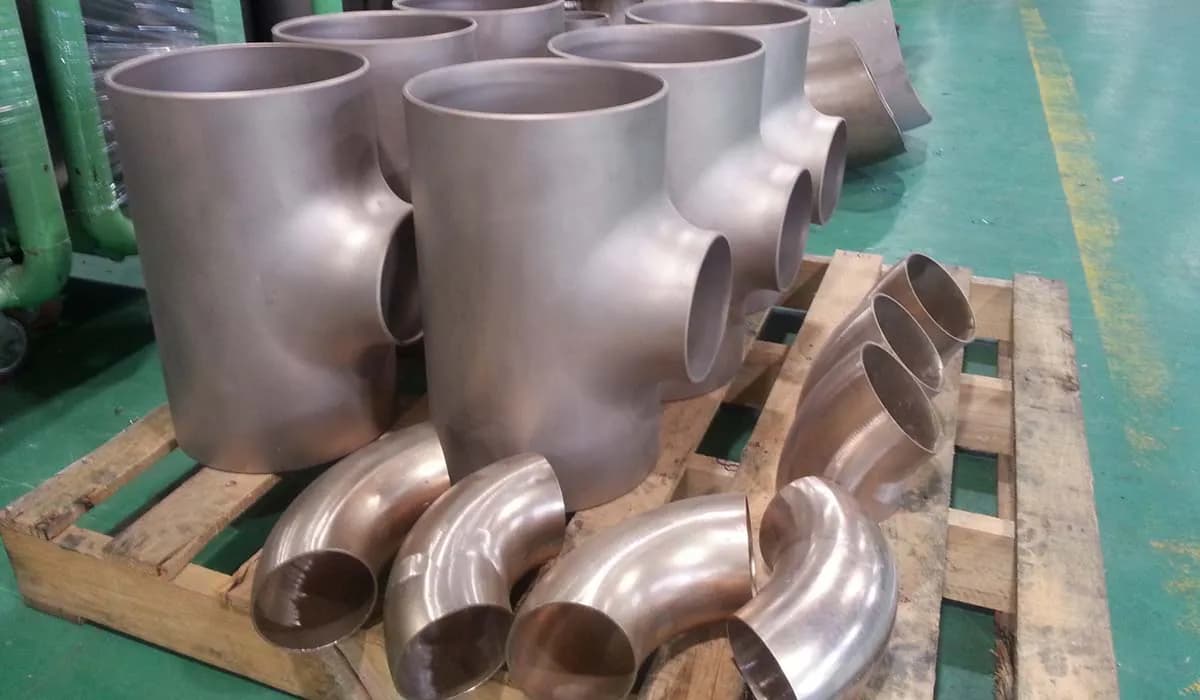
Alloy tees and elbows arranged on a pallet for product preparation

Alloy flanges and fittings

Stainless Steel Pipe Fittings Manufacturer & Exporter

Raymond Tube Industries manufactures and supplies stainless steel pipe fittings for technically defined process and project requirements. The commercial scope includes butt-weld elbows, tees, reducers, caps, stub ends, and forged socket-weld or threaded fittings in approved stainless grades. A complete request connects grade, geometry, NPS or DN, schedule or bore, end preparation, material and dimensional standards, inspection, documentation, packing, quantity, and destination.

Technical snapshot

Key details for your specification.

Material family

304L, 316L, 904L, 254 SMO, and other approved stainless routes
Butt-weld forms

90-degree and 45-degree elbows, equal and reducing tees, concentric and eccentric reducers, caps, crosses, and stub ends

Forged forms

Socket-weld and threaded elbows, tees, couplings, unions, nipples, and project-defined fittings

Dimensional basis

ASME B16.9, ASME B16.11, MSS, or approved drawing route as applicable

Wall definition

State schedule, wall thickness, matching pipe, bore, radius, and end preparation

Inspection

Material identity, dimensions, weld or construction route, NDE, PMI, and TPI where specified

Documents

MTC, heat or lot traceability, dimensional records, marking, packing, and inspection release

RFQ sequence

Grade -> geometry -> size sequence -> schedule -> ends -> standards -> quality -> destination

Engineering discussion

Context before component selection.

Geometry is the first fitting decision

An elbow, tee, reducer, cap, stub end, coupling, union, or nipple carries a different dimensional definition. Record the full geometry and size sequence before comparing quotations.

Butt-weld and forged fittings follow different routes

Wrought butt-weld fittings are commonly controlled by schedule, wall, radius, and bevel. Forged socket-weld or threaded fittings require class, end, thread, socket, and ASME B16.11 review. They should remain separate line items.

Schedule cannot be inferred from the grade

State the matching pipe schedule or wall thickness, corrosion allowance where applicable, end preparation, and any bore-matching requirement. Reducers and reducing tees require the full ordered size sequence.

Inspection must reflect construction

The quality plan should identify parent material, seamless or welded construction where relevant, dimensions, end preparation, heat treatment evidence, PMI, NDE, marking, and TPI requirements.

Packing protects both ends and identity

Bevels, threads, sockets, machined ends, and material marking require protection and segregation through export packing. The packing list and item tags should reconcile with the document dossier.

Standards and release

Define the basis, then document it.

ASTM A403 / ASME SA403

A common wrought austenitic stainless fitting route; confirm grade, class, construction, heat treatment, tests, and ordered product form.

ASME B16.9

Dimensional route for applicable factory-made wrought butt-welding elbows, tees, reducers, caps, and related fittings.

ASME B16.11

Dimensional and rating route for applicable forged socket-weld and threaded fittings; keep forged items separate from butt-weld line items.

Drawing and piping class

Radius, tangent, reducer orientation, branch sequence, ends, tolerances, and special inspection remain controlled by project documents.

Related application

Data center cooling systems

Review how water chemistry, cooling architecture, equipment interfaces, inspection, and documentation shape stainless and duplex component RFQs.

Open engineering hub

Buyer questions

Frequently asked questions.

Which stainless steel pipe fitting forms can RTI quote?

Requests may include elbows, tees, reducers, caps, stub ends, crosses, and forged socket-weld or threaded fittings when fully specified.

What is the difference between ASME B16.9 and ASME B16.11 fittings?

B16.9 is commonly used for factory-made butt-weld fittings, while B16.11 covers applicable forged socket-weld and threaded fittings.

Must the pipe schedule be stated for stainless steel fittings?

Yes. State schedule, wall thickness, matching pipe, or bore requirements along with the fitting geometry and size.

How should a reducer or reducing tee be described?

Provide the complete large-end, small-end, run, and branch size sequence, schedule, orientation, and end preparation.

Can PMI, NDE, and TPI be included?

Yes. List the required method, sampling or coverage, acceptance basis, witness points, and final reports in the enquiry.

Which release documents should be requested?

Define MTC, heat or lot traceability, dimensional records, PMI or NDE reports, marking, packing, and TPI release where applicable.

What details are needed for a stainless fitting RFQ?

Send grade, fitting type, complete sizes, schedule or wall, ends, standard, quantity, tests, documents, packing, and destination.

Technical quotation

Turn this guidance into a controlled request.

Capture the material, product form, dimensions, standard, inspection, documentation, packing, and destination requirements for review.

Technical quotation desk

Have a Technical Requirement?

Send us your material grade, size, class or schedule, quantity, and specification.