
Material family
Austenitic and high-alloy stainless steel grades selected by project specification
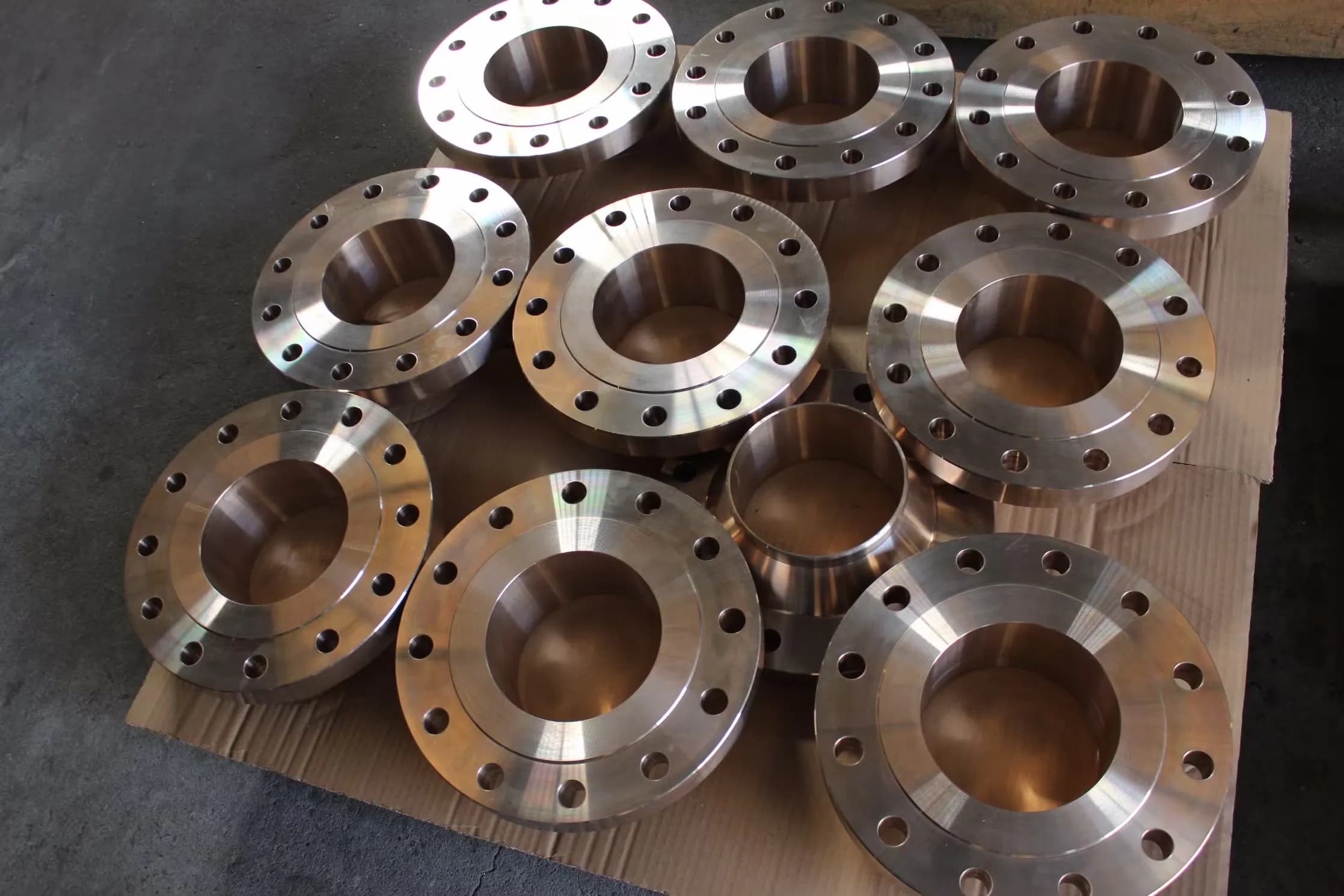
Alloy flanges and fittings
Raymond Tube Industries manufactures and supplies stainless steel flanges for process, utility, chemical, marine, energy, and project piping requirements. Buyers can define 304L, 316L, 904L, 254 SMO, or another approved grade together with the flange form, NPS or DN, pressure class, facing, bore, dimensional standard, inspection scope, documentation, packing, and destination. Final grade selection and product acceptance remain governed by the approved purchase specification.
Technical snapshot
Engineering discussion
304L, 316L, 904L, and 254 SMO are not interchangeable purchasing labels. The project environment, corrosion mechanism, fabrication route, piping class, and approved material specification determine which grade enters the RFQ.
A weld neck flange requires bore and schedule alignment; a blind flange defines a closure; slip-on, socket-weld, threaded, lap-joint, long-weld-neck, and orifice forms introduce different dimensional and inspection questions. State the exact form on each line item.
The material grade does not determine pressure class, RF or RTJ facing, gasket interface, bore, or surface finish. These values must come from the piping class, dimensional standard, or approved drawing.
Define PMI coverage, dimensional records, NDE, TPI witness points, marking, and MTC requirements before order release. Lot-specific chemistry and mechanical results must be checked against the supplied certificate.
Face protection, segregation, case or pallet requirements, shipping marks, document format, destination, and inspection release should be agreed with the component configuration rather than added after manufacture.
Standards and release
Confirm the material-product specification and grade for the ordered stainless steel forging rather than applying one standard to every stainless grade.
Use for applicable NPS 1/2 through NPS 24 flange dimensions, classes, facings, tolerances, and marking requirements.
Use the applicable series and project basis when a large-diameter flange falls outside the B16.5 scope.
Piping class, drawing revision, gasket system, surface finish, testing, and acceptance criteria remain order-specific controls.
Applications and next steps
Process and utility piping
Petrochemical and refinery systems
Chemical-processing equipment
Marine and coastal facilities
Water and desalination plants
Food, pharmaceutical, and clean-process utilities
Heat exchanger and vessel connections
Maintenance and shutdown replacement packages
Buyer questions
Technical quotation
Capture the material, product form, dimensions, standard, inspection, documentation, packing, and destination requirements for review.
Technical quotation desk
Send us your material grade, size, class or schedule, quantity, and specification.