
Engineered for Critical Industries. Trusted for Global Supply.
Raymond Tube Industries logoRaymond Tube IndustriesISO 9001:2015 Certified — Consistent Quality. Global Standards. Trusted Supply.
Illustrative Inconel 625 elbow, equal tee, reducers, and pipe cap with butt-weld ends

Alloy flanges and fittings

Nickel Alloy Pipe Fittings Manufacturer & Exporter

Raymond Tube Industries manufactures and supplies nickel alloy pipe fittings for corrosion-critical and high-integrity process piping. Enquiries may include Inconel, Incoloy, Hastelloy, Monel, Alloy 20, and other specification-approved grades in butt-weld or forged forms. Define the exact alloy and UNS designation, fitting geometry, size sequence, schedule or bore, ends, material and dimensional standards, inspection, documentation, quantity, packing, and destination for a comparable technical offer.

Technical snapshot

Key details for your specification.

Material range

Inconel 625, Incoloy 825, Hastelloy C276, Monel 400, Alloy 20, and approved project grades
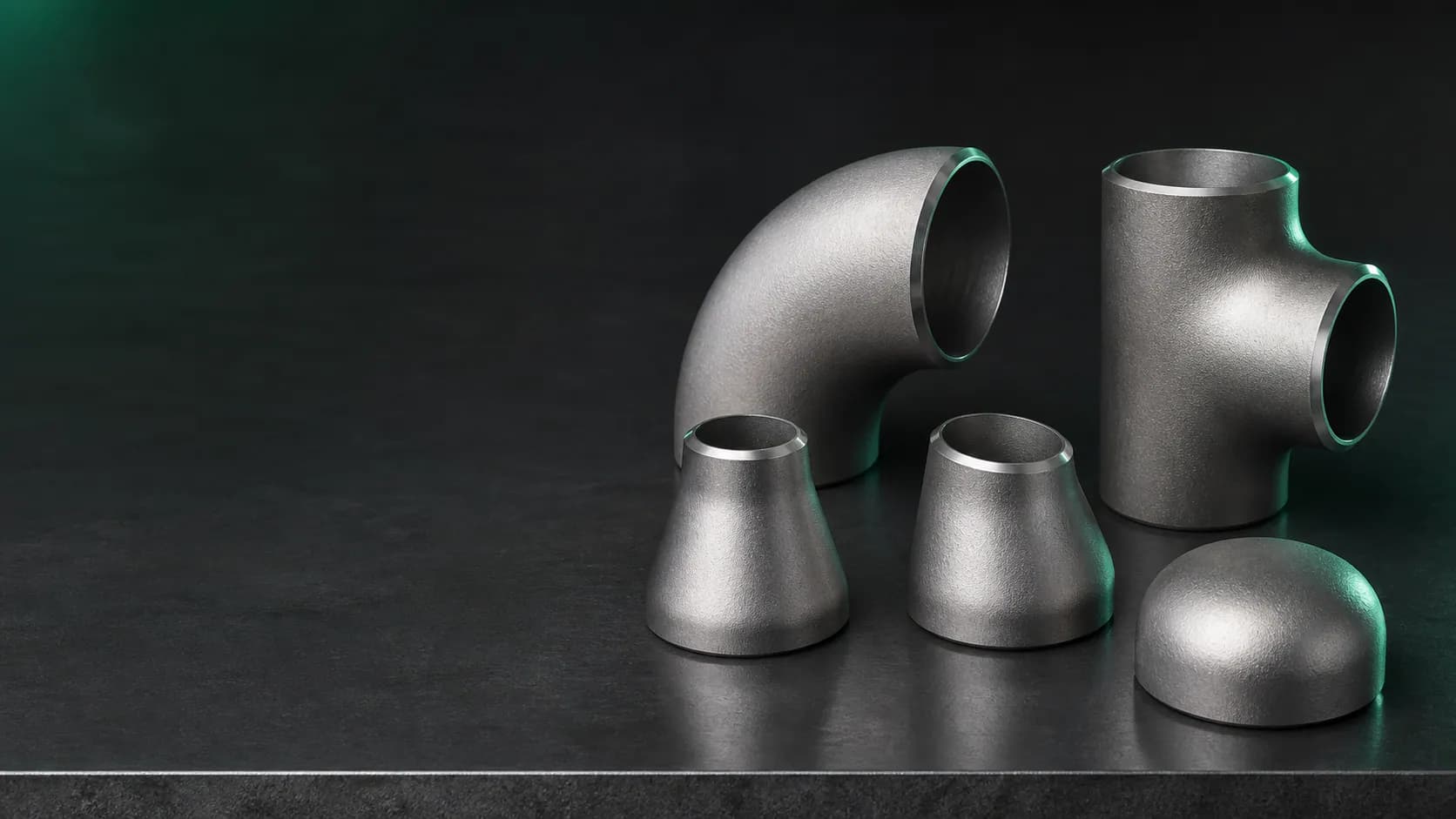
Butt-weld fittings

Elbows, tees, reducers, caps, stub ends, crosses, and drawing-controlled wrought forms

Forged fittings

Socket-weld and threaded elbows, tees, couplings, unions, nipples, and project-specific forms

Material route

ASTM B366 / ASME SB366 or another grade- and construction-appropriate product specification

Dimensions and ends

ASME B16.9, ASME B16.11, MSS, or drawing with schedule, radius, bevel, socket, or thread definition

Quality scope

PMI, MTC, dimensions, NDE, TPI, heat treatment, NACE, and IGC review where specified

Traceability

Heat or lot identity reconciled across material, marking, tests, packing, and release documents

Quotation data

Grade, geometry, full sizes, schedule, ends, standards, quantity, inspection, documents, and destination

Engineering discussion

Context before component selection.

Start with alloy identity and fitting construction

The grade and UNS designation must be paired with wrought butt-weld, forged socket-weld, threaded, welded, seamless, or drawing-based construction as applicable. A generic nickel alloy fitting label is not enough for technical acceptance.

Fitting geometry needs a complete size sequence

Elbows require angle and radius; tees require run and branch; reducers require large and small ends plus orientation; stub ends require pattern and mating lap-joint details. Record the full geometry on each item.

Schedule and ends control fit-up

State wall schedule, matching pipe, bevel, socket, thread, bore, tangent, and any transition requirement. These details affect dimensions, fabrication review, inspection, and commercial comparability.

Testing follows alloy, construction, and service

PMI, heat treatment evidence, NDE, corrosion testing, NACE review, dimensions, marking, TPI, and certificate scope should be selected from the project requirements rather than assumed from the grade name.

Release documents must reconcile every line item

MTC, heat or lot identity, inspection records, NDE reports, marking, packing list, and release note should match the fitting type, quantity, and shipping identification before dispatch.

Standards and release

Define the basis, then document it.

ASTM B366 / ASME SB366

A common route for factory-made wrought nickel alloy fittings; verify grade, class, construction, heat treatment, testing, and ordered form.

ASME B16.9

Use for applicable factory-made wrought butt-welding fitting dimensions, tolerances, marking, and end preparation.

ASME B16.11

Use for applicable forged socket-weld and threaded fittings with the required pressure class and end details.

Project additions

NDE, corrosion testing, NACE review, cleaning, special tolerances, inspection hold points, and documentation remain purchase-order controls.

Related application

Data center cooling systems

Review how water chemistry, cooling architecture, equipment interfaces, inspection, and documentation shape stainless and duplex component RFQs.

Open engineering hub

Buyer questions

Frequently asked questions.

Which standard commonly applies to wrought nickel alloy fittings?

ASTM B366 / ASME SB366 is a common product route, but the exact grade, class, construction, and project specification must be confirmed.

Which nickel alloy fitting forms can be requested?

Elbows, tees, reducers, caps, stub ends, crosses, and forged socket-weld or threaded fittings can be reviewed when fully specified.

How should a reducing fitting be sized?

State the complete run, branch, large-end, and small-end sequence, together with schedule or wall and end preparation.

Are forged nickel alloy fittings part of ASTM B366?

Forged fittings require their own grade-appropriate material route and ASME B16.11 or drawing review; do not combine them blindly with wrought B366 items.

Can NACE requirements be added to a nickel alloy fitting enquiry?

Yes, where the project requires them. State the applicable project criteria, material condition, hardness, test, and document expectations.

Can PMI and TPI be coordinated for mixed alloy packages?

Yes. Define the PMI coverage, witness points, segregation controls, report format, and release authority before manufacture.

What creates a complete nickel alloy fitting RFQ?

Provide grade and UNS, geometry, full sizes, schedule or wall, ends, standards, quantity, tests, documents, packing, and destination.

Technical quotation

Turn this guidance into a controlled request.

Capture the material, product form, dimensions, standard, inspection, documentation, packing, and destination requirements for review.

Technical quotation desk

Have a Technical Requirement?

Send us your material grade, size, class or schedule, quantity, and specification.