
Large campus headers
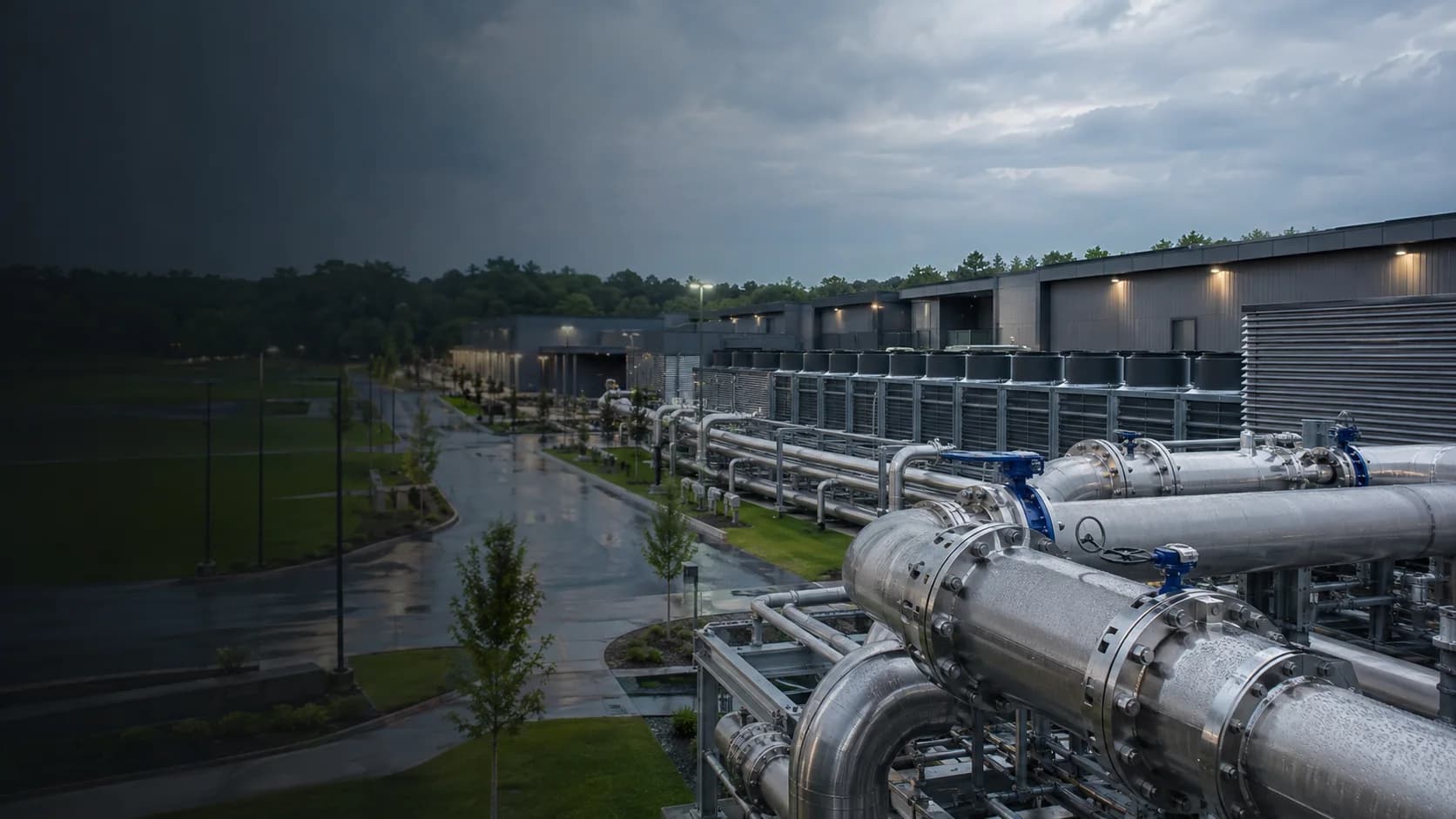
Phased distribution systems can involve sizeable chilled-water and condenser-water headers, equipment branches, bypasses, and future tie-ins. Mating dimensions and bore alignment need deliberate control.
United States / Northern Virginia / Data centers
Raymond Tube Industries manufactures and exports stainless steel and duplex flanges and pipe fittings for Ashburn and Northern Virginia data-center requirements, with RFQ support for high-capacity cooling-water plants, phased campus growth, maintenance, and retrofit work.
Engineering context
Define the operating system, water chemistry, equipment interfaces, dimensional standard, and release documentation before selecting the component route.
Ashburn sits within Northern Virginia's exceptionally concentrated data-center market. Large campuses and continuous capacity additions make configuration control important: a component may need to match an established piping class, equipment nozzle, campus standard, or an earlier construction phase.
High-density and AI-oriented facilities can increase the importance of dependable heat transport and maintainable mechanical systems. Cooling-water flanges and fittings should therefore be procured with explicit bore or schedule, facing, pressure class, inspection, cleanliness, and document requirements rather than by alloy name alone.
RTI supports Ashburn enquiries from India as a manufacturer and exporter. RTI does not state that it has an office, warehouse, stockyard, or manufacturing facility in Ashburn or Virginia. Delivery and availability are confirmed only through a project-specific quotation.
Location-specific review
Phased distribution systems can involve sizeable chilled-water and condenser-water headers, equipment branches, bypasses, and future tie-ins. Mating dimensions and bore alignment need deliberate control.
Maintenance windows and brownfield modifications benefit from drawing review, field-dimension confirmation, clear area tagging, and separation of standard components from custom machining.
Higher rack densities can change facility-water architecture and heat-exchanger interfaces. State the exact circuit boundary and equipment connection rather than assuming a conventional comfort-cooling specification.
Data-center applications
Each application carries its own fluid, equipment, inspection, cleanliness, and maintenance context.
Flanged headers, pump connections, isolation points, and branch fittings supporting multiple buildings or phases.
Component routes for chillers, pumps, tower cells, strainers, and treatment equipment in open or closed heat-rejection systems.
Project-defined intermediate loops connecting heat exchangers and data-hall liquid-cooling infrastructure.
New plant modules, future branches, and interconnections that must remain dimensionally and metallurgically compatible with campus standards.
Blind flanges, replacement fittings, removable equipment connections, and accurately matched components for planned outages.
Smaller process branches around filtration, chemical dosing, make-up, and blowdown equipment.
Material priorities
316L, 304L, and Duplex 2205 receive the main procurement focus. Super duplex and nickel alloys remain restricted to explicitly defined specialty services.
Component forms
Product form, material route, dimensions, and inspection must remain explicit throughout the quotation.
Weld neck flanges are commonly reviewed for welded headers and equipment nozzles. Slip-on, blind, socket weld, threaded, and lap-joint forms remain specification-dependent choices for isolation, maintenance, small-bore service, and dissimilar-material transitions.
Review product routeElbows, tees, reducers, caps, and stub ends define direction changes, branch connections, equipment transitions, and removable joints. Socket-weld and threaded forged fittings may be evaluated for smaller utility branches where the piping class permits.
Review product routeStandards
Use the project piping class, equipment drawings, and purchase specification to resolve the final combination.
Use the project piping class to define NPS, class, facing, bore, flange form, and dimensional edition. Pressure class is not a standalone pressure guarantee and must be reconciled with material and temperature.
ASME B16.9Specify fitting geometry, NPS, schedule or wall thickness, end preparation, dimensional edition, and the applicable material product specification for elbows, tees, reducers, caps, and stub ends.
ASME B16.11Socket-weld and threaded fittings require an explicit pressure class, end type, dimensional basis, and material grade. They should follow the approved small-bore piping class rather than a generic substitution.
Inspection and documentation
Confirm the exact material designation, flange form, class, facing, bore, fitting schedule, end preparation, and standard edition against the owner or EPC piping class.
Use equipment drawings or verified field dimensions for replacement interfaces. Nominal size alone does not establish bore, facing, thickness, or drilling compatibility.
Link heat numbers, MTCs, PMI where specified, inspection records, packing labels, and area tags to the bill of materials for phased delivery.
Procurement controls
A new campus package and an operating-site replacement carry different drawing, compatibility, tagging, and delivery risks.
Attach chiller, pump, cooling-tower, heat-exchanger, and skid-nozzle data where components mate directly to vendor equipment.
Specify internal cleanliness, capping, surface treatment, packaging, and release inspection where debris or contamination controls apply.
Identify building, yard, module, system, and required-on-site dates so packing and documentation can align with the construction plan.
Buyer FAQs
Answers keep location intent useful without making local-stock, local-facility, or named-project claims.
Engineering links
Data-center component RFQ
Send the circuit, material and UNS, product form, size, class or schedule, facing or end connection, quantity, standards, inspection, documentation, packing, and destination.
Technical quotation desk
Send us your material grade, size, class or schedule, quantity, and specification.