
Destination
Boardman, Oregon, USA
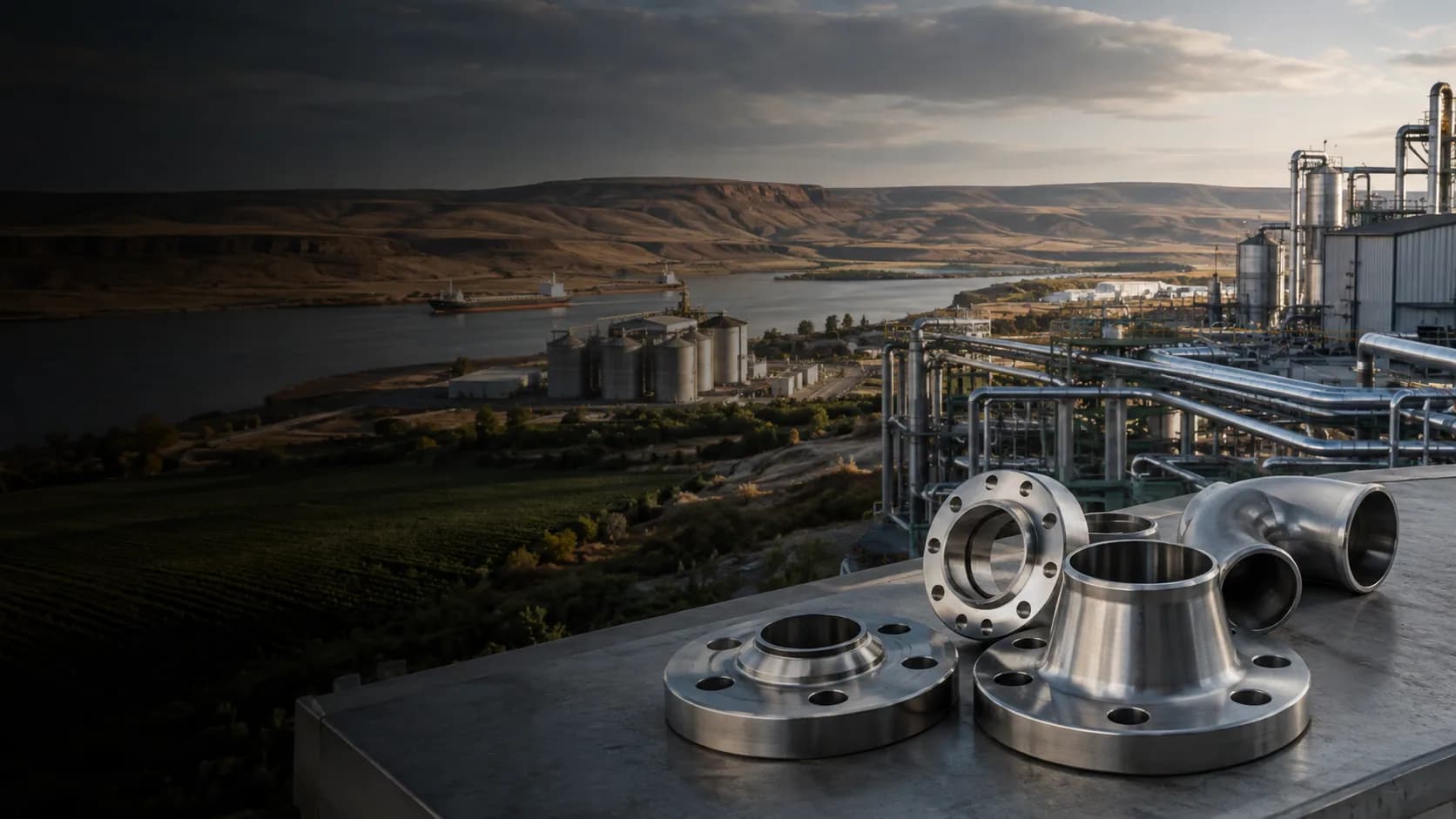
Engineered Flanges & Pipe Fittings for Boardman, Oregon
Specification-led international supply support for Boardman process, utility, food-processing, water, energy, and industrial maintenance requirements.
Boardman procurement context
International supply basis
RTI does not state a Boardman office, warehouse, manufacturing facility, or local stock position.
Boardman combines food and agricultural processing, industrial utilities, transportation, warehousing, information infrastructure, and energy-related activity in a concentrated Eastern Oregon industrial setting. Those operations can involve very different piping duties: clean process lines, washdown and water services, steam and condensate, compressed air, cooling systems, chemical dosing, industrial wastewater, bulk transfer, and maintenance replacement work. A flange or fitting enquiry therefore needs more than a grade name. The process medium, temperature, pressure, cleaning chemistry, corrosion exposure, piping class, joining method, and documentation scope all affect the purchasing basis.
RTI approaches Boardman requirements as a controlled international supply enquiry. The quotation can be aligned to the purchaser's approved ASTM or ASME material basis, component form, size, class or schedule, facing, bore, testing, certification, marking, preservation, and delivery instruction. RTI does not claim a Boardman office, warehouse, manufacturing facility, or local stock position. The commercial route is from RTI's India operations and export desk to the destination and Incoterm agreed with the buyer. This distinction helps procurement teams compare offers on the same technical and logistical basis.
Product range
The product form, material specification, dimensions, class or schedule, inspection, and destination must be controlled together. These are RTI product photographs used to show the component families available for technical review.
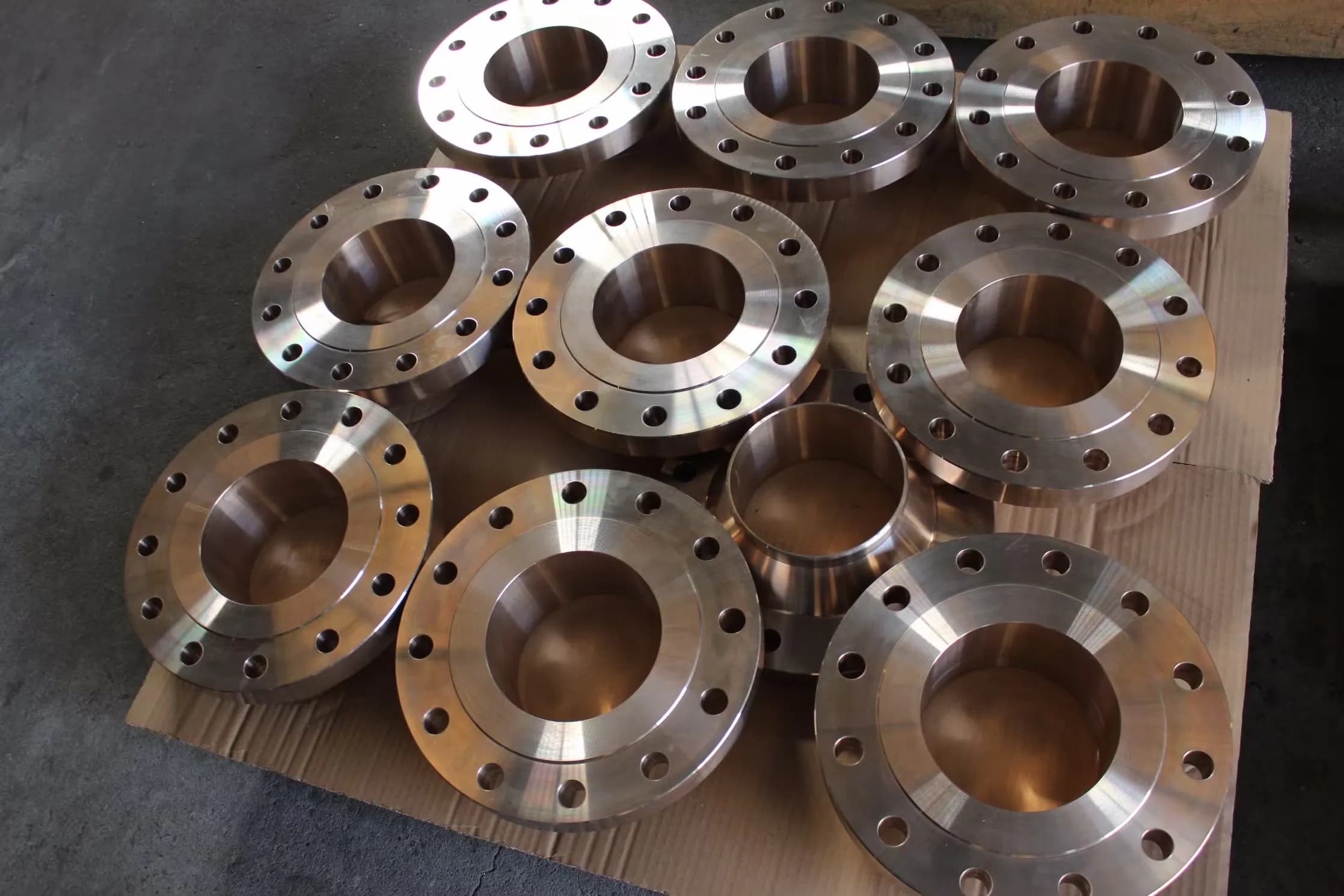
Flange selection starts with the piping class and approved material route. RTI supports weld neck, slip-on, blind, socket weld, threaded, lap joint, long weld neck, orifice, and drawing-based flange enquiries. Buyers should define NPS or DN, pressure class, RF or RTJ facing, bore or matching pipe schedule, dimensional standard and edition, corrosion allowance where applicable, and any project-specific machining or marking requirement. The material standard must match the product form; a generic request for a stainless or nickel flange is not enough for technical release.
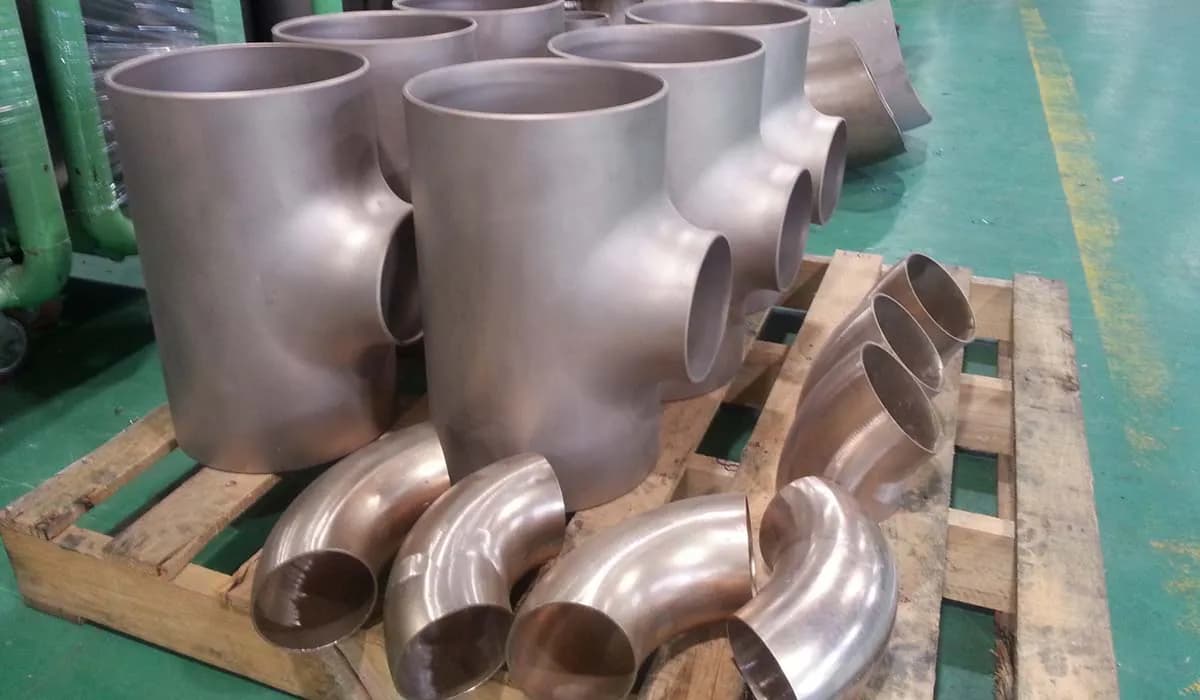
RTI supports butt-weld and forged fitting enquiries for process, utility, cooling, water, and maintenance piping. Typical forms include elbows, equal and reducing tees, concentric and eccentric reducers, caps, stub ends, crosses, couplings, unions, nipples, and branch fittings. The RFQ should distinguish wrought butt-weld fittings from forged socket-weld or threaded fittings and state the applicable schedule, wall thickness, end preparation, dimensional standard, material grade, and examination requirements. This prevents a nominal product description from masking a different manufacturing or inspection basis.
Material families
The material family narrows the review, but project engineering still controls the final grade, product specification, heat treatment, corrosion basis, fabrication route, and acceptance criteria.
304/304L and 316/316L are frequently considered for industrial process and utility systems, while 321, 347, 904L, and 254 SMO may enter a project specification for temperature, fabrication, or corrosion reasons. The final grade must be selected against the actual medium, cleaning regime, chloride exposure, temperature, and approved piping class.
Review material routeUNS S31803 or S32205 routes may be considered where a project requires a duplex structure, higher strength, and resistance suited to the defined environment. Heat treatment condition, grade identity, product specification, welding controls, and testing must remain aligned; the family name alone is not an acceptance criterion.
Review material routeUNS S32750 and S32760 are separate grade routes used for demanding chloride-bearing or seawater-related duties when approved by project engineering. Procurement should capture the exact UNS designation, applicable product standard, solution treatment, corrosion-testing requirement, PMI, and any project-specific acceptance criteria.
Review material routeInconel 625, Incoloy 825, Hastelloy C276, Monel 400, Alloy 20, and other controlled nickel-alloy grades may be specified for corrosive chemicals, elevated temperatures, sour or reducing environments, or other project-defined service. Each alloy has a distinct chemistry, product-form standard, and fabrication context; substitutions require purchaser approval.
Review material route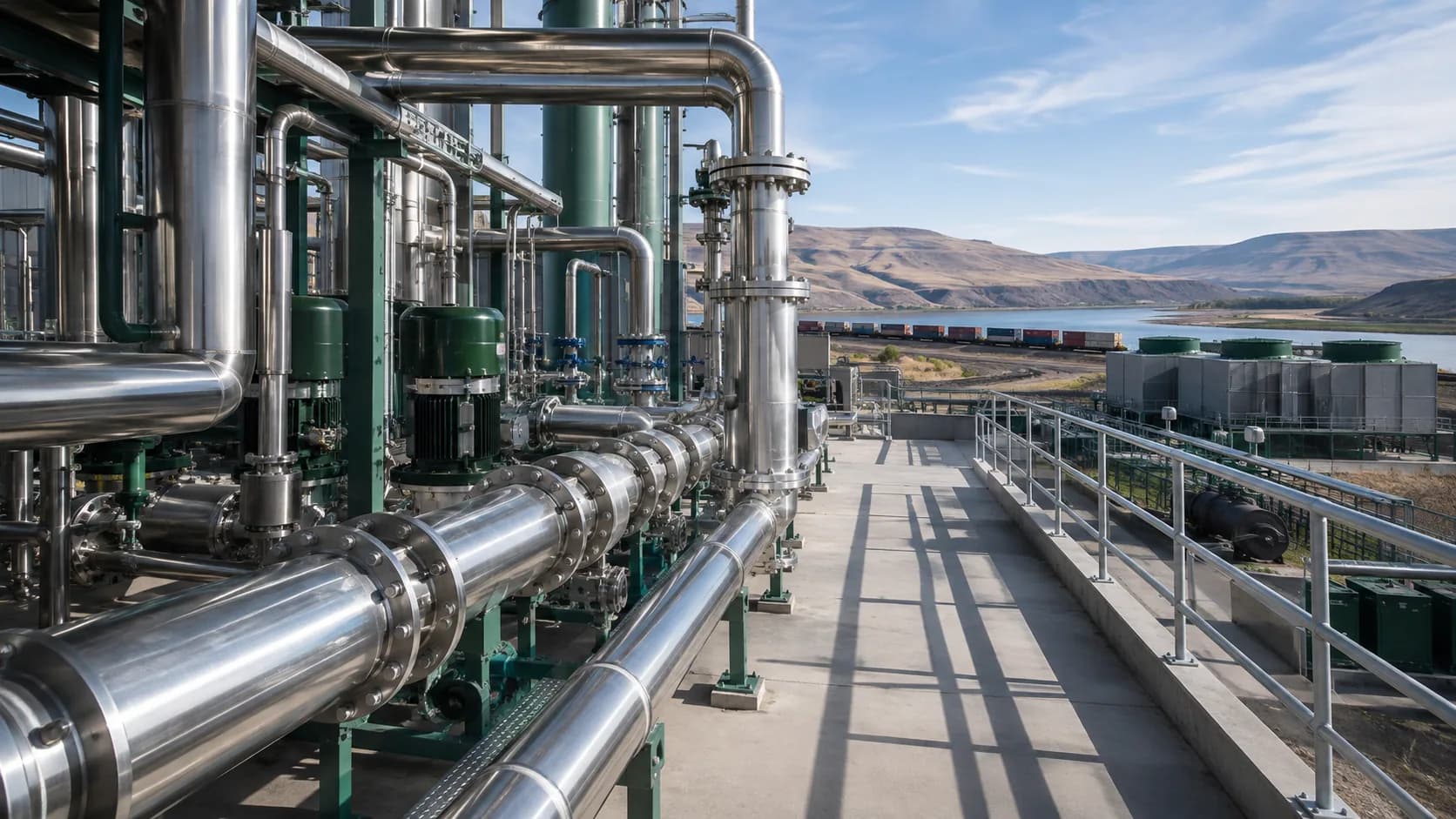
Boardman operating environments
Boardman's industrial economy is broader than a single sector. Each service should be translated into a defined material and component requirement before quotation.
Boardman's food-processing base creates requirements across product handling, wash systems, clean utilities, steam, condensate, refrigeration support, water, and wastewater services. Sanitary or hygienic applications may require different component geometry and surface controls from standard ASME industrial flanges and fittings, so the buyer should identify the applicable piping specification rather than assuming interchangeability.
Treatment, reuse, chemical dosing, pumping, and utility piping can expose components to changing chemistry, chlorides, cleaning chemicals, and intermittent service. Material selection should follow the water analysis, design conditions, corrosion allowance, joining method, and project-approved standards.
Power, renewable-energy support, ethanol, steam, fuel, compressed air, and balance-of-plant systems can involve varied temperature and pressure duties. The RFQ should identify the line service, design basis, code, material class, and required inspection instead of selecting an alloy from a broad industry label.
Boardman's information and data-center activity depends on cooling, water, chemical treatment, fire-protection interfaces, and utility systems. Piping-component enquiries should distinguish process cooling from building-service piping and identify the governing project specification and testing requirements.
Agricultural products, ingredients, fuels, treatment chemicals, and industrial liquids may move through transfer and storage systems. Flange facing, gasket compatibility, wall schedule, erosion or corrosion exposure, and maintenance access can all influence the component definition.
Replacement components often require closer control than greenfield items because they must match an existing line. Buyers should provide photographs, old markings, measured dimensions, drawings, mating flange information, and the original piping class where available before assuming a standard replacement.
Port of Morrow
The Port of Morrow identifies Boardman as a major industrial location with food processing, fiber and seed processing, lumber-related activity, transportation, warehousing, freight distribution, energy, and information infrastructure. Its Boardman, East Beach, Airport, and South Morrow industrial parks connect industrial land and utilities with Columbia River, highway, rail, and regional freight routes. For a component buyer, that concentration matters because the final destination may be a plant, contractor, maintenance organization, freight forwarder, or project staging point rather than a simple city address.
A Boardman quotation should therefore state the named consignee, final delivery location, Incoterm, required delivery window, packing method, lifting or handling constraints, document recipient, and any import or receiving instructions. RTI can prepare export packing, marking, packing lists, certificates, and inspection records to the agreed order scope. Carrier selection, customs classification, taxes, import compliance, inland delivery, and site receiving remain contract-specific and should be confirmed by the responsible logistics parties.
Standards and specification basis
The standard references below are procurement routes, not a universal declaration that every grade or form applies. The purchaser's approved code, piping class, datasheet, and drawing remain controlling.
Use the project-specified dimensional standard and edition for flange size, class, dimensions, bolting pattern, and facing. ASME B16.47 applies to defined large-diameter flange ranges and must not be treated as a blanket extension of B16.5.
Open technical guidanceASME B16.9 provides dimensional requirements for factory-made wrought butt-welding fittings, while ASME B16.11 covers forged socket-welding and threaded fittings. The product form, pressure class or schedule, and material standard must be stated together.
Open technical guidanceThis route is commonly used for forged or rolled alloy and stainless flange materials, subject to the exact grade and product requirements. State the required grade, supplementary requirements, heat treatment, and certificate basis.
Open technical guidanceASTM A403 applies to wrought austenitic stainless fittings and ASTM A815 to wrought ferritic, ferritic/austenitic, and martensitic stainless fittings. Confirm the grade, class, manufacturing route, heat treatment, and examination requirements in the order specification.
Open technical guidanceASTM B564 is relevant to specified nickel-alloy forged flange products, while ASTM B366 covers defined wrought nickel-alloy fittings. Use the approved UNS grade and product standard; an alloy trade name by itself does not complete the material requirement.
Open technical guidanceMatch fitting wall thickness and weld-neck flange bore to the connected pipe and project machining requirement. State ASME B36.10M or B36.19M context where applicable and identify any non-standard bore or transition detail on a controlled drawing.
Open technical guidanceInspection and quality evidence
Material identity, traceability, dimensions, testing, inspection, and final documents should be agreed before production or sourcing begins.
Heat number transfer, component marking, source-material records, and the final material certificate should form one traceable chain. EN 10204 3.1 certification can be specified where contractually required, but its scope should be defined in the purchase order.
Positive Material Identification, chemical or mechanical testing, corrosion testing, NDE, and third-party inspection should be stated at quotation stage. Acceptance methods, sampling, hold points, witness points, and reporting format must match the project ITP.
Define the dimensions to be reported, applicable tolerance standard, facing finish, wall thickness, bevel, bore, bolt holes, marking, and visual acceptance. Drawing-based items need an approved revision before manufacturing release.
Boardman buyer checklist
A complete RFQ reduces clarification cycles and makes price, compliance, documentation, and delivery comparisons more meaningful.
Material grade and UNS, product form, size, class or schedule, facing or end connection, bore, dimensional standard and edition, quantity, and approved drawing where applicable.
Design and operating conditions where needed for review, fluid or environment, MTC type, PMI, NDE, corrosion testing, TPI agency, inspection plan, marking, and traceability requirements.
Required delivery date, Incoterm, consignee, Boardman destination, packing, documentation index, attachment set, and any approved-vendor, origin, or import conditions that affect quotation.
Why Raymond Tube Industries
RTI supports international buyers with alloy-focused quotation, inspection planning, traceability, documentation, packing, and dispatch coordination for the agreed destination.
One technical enquiry can cover stainless steel, duplex, super duplex, and nickel-alloy flange and fitting requirements while keeping each grade and product standard distinct.
Quotations are built around the material, dimensional basis, quantity, inspection, certification, packing, and delivery information supplied by the buyer, with deviations identified for review.
MTC, PMI, inspection, TPI, marking, packing, and release-document requirements can be coordinated against an agreed document schedule rather than treated as an afterthought.
The RTI export desk supports cross-border quotation, packing, documentation, and dispatch coordination for the agreed U.S. destination without making a local-stock or local-facility claim.
Continue the technical review
Use these routes to review the broader U.S. market context, exact component family, material identity, and quality-document requirements before submitting the RFQ.
Boardman procurement FAQ
Boardman technical quotation
Share the material grade and UNS, product form, size, pressure class or schedule, facing or end connection, standard, quantity, inspection, MTC, PMI, TPI, packing, required date, and Boardman delivery destination.
Technical quotation desk
Send us your material grade, size, class or schedule, quantity, and specification.