
Destination
Baytown, Texas

Baytown integrated-industry procurement
Support connected process, manufacturing and utility packages without flattening different services into one generic alloy requirement.
Baytown, Texas procurement context
International supply basis
RTI does not state that it has a Baytown office, warehouse, manufacturing facility, local stock, project award, operator relationship or approval for any emerging-energy technology.
Baytown combines large-scale refining and petrochemical activity with advanced manufacturing, logistics, utilities and newer energy-related investment. That integrated environment can place alloy components in process units, steam and condensate systems, cooling water, chemical treatment, storage, transfer, fabricated packages and maintenance replacements. A purchasing schedule may contain standard ASME items beside drawing-controlled components, so each line needs an explicit material specification, product form, dimensional basis, class or schedule, facing or connection, quantity, inspection scope and required delivery sequence.
Material priorities change across the site. Stainless grades may suit defined utility and process duties; duplex and super duplex may be considered for chloride-bearing systems; nickel alloys may enter corrosive or elevated-temperature specifications. Emerging-energy language does not by itself justify a premium alloy. The process conditions and approved engineering basis remain decisive. Buyers should separate licensor-controlled specifications, conventional utility classes and fabricator drawings so that technical exceptions and document requirements are reviewed by the correct approval authority. RTI supports technical clarification, inspection planning, documentation, export packing and international delivery to the agreed Baytown destination, without claiming a Baytown office, warehouse, manufacturing site, local inventory, project award, operator relationship or technology approval.
Flanges and pipe fittings
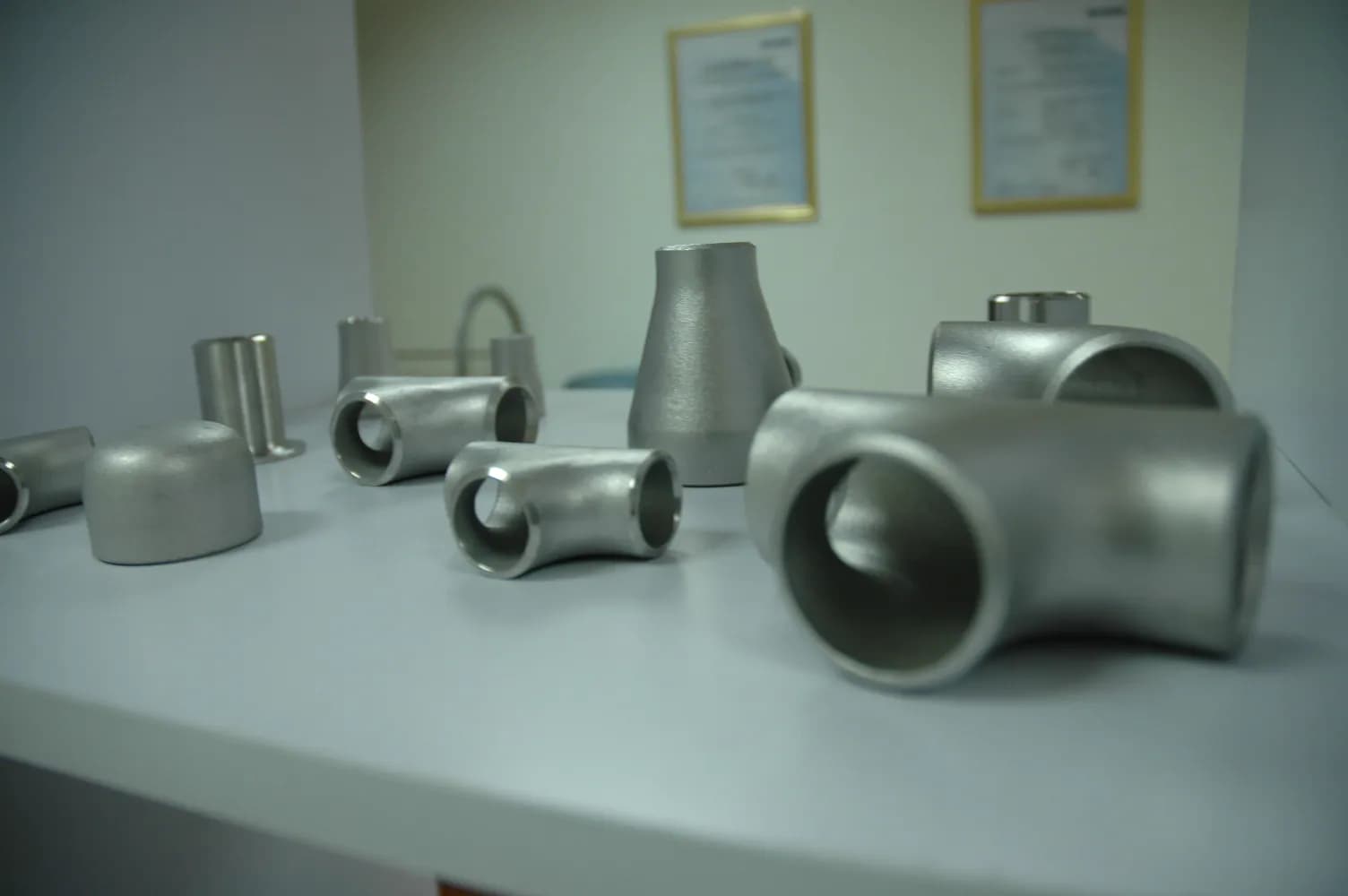
These genuine RTI product photographs identify the principal component families. The final quotation follows the buyer's approved material requisition, piping class and inspection scope.
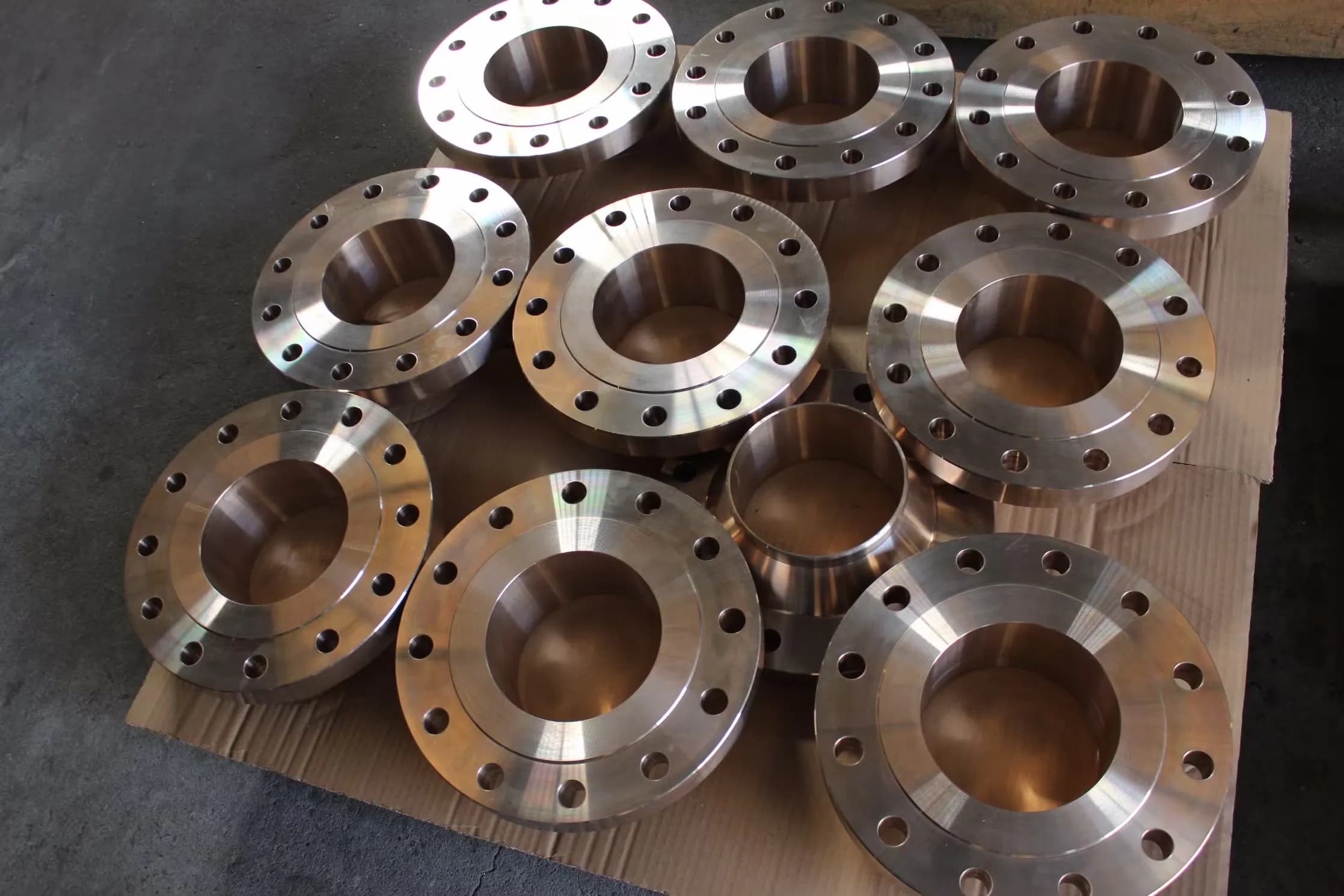
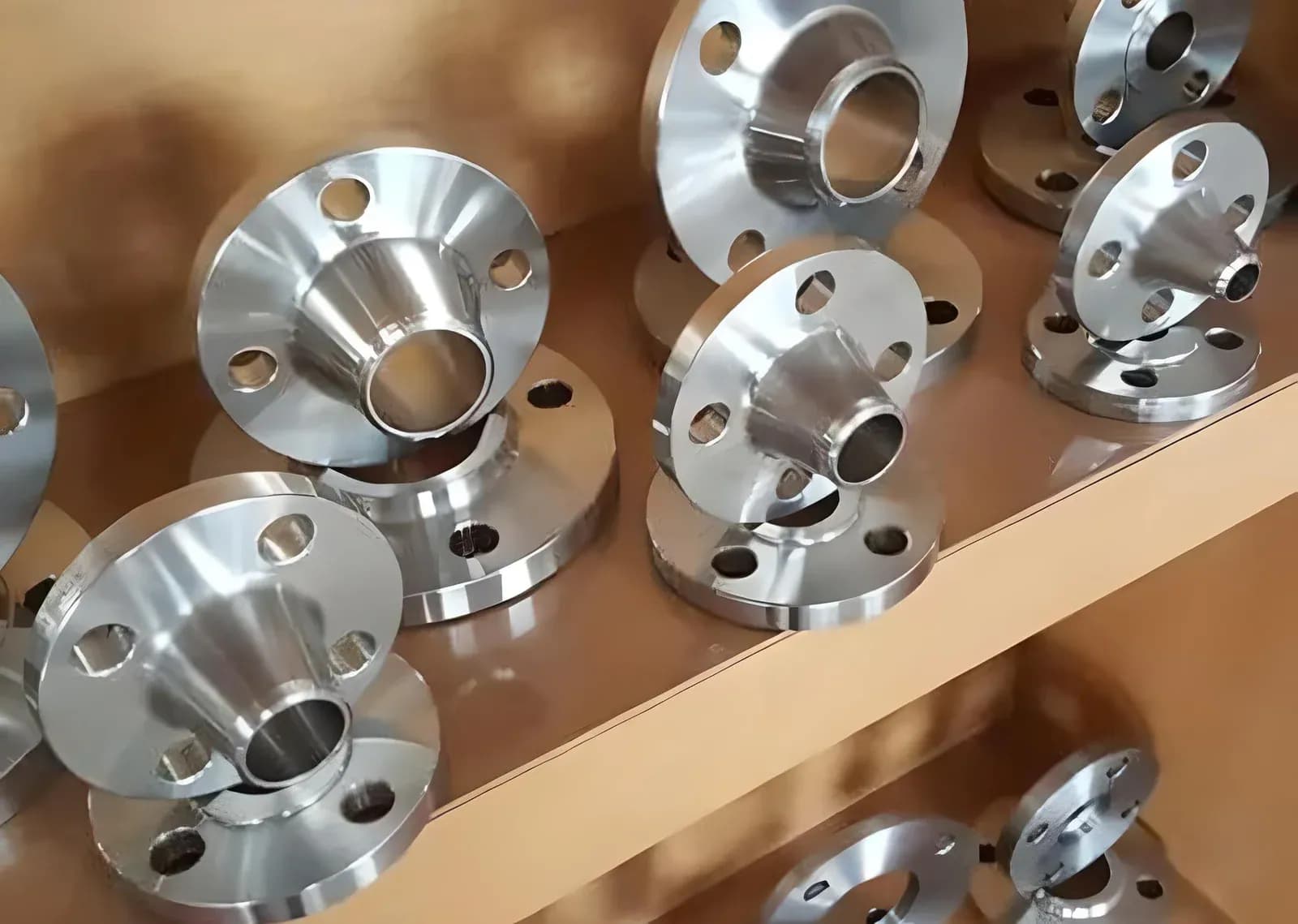
Flange enquiries may cover weld neck raised face, weld neck ring-type joint, slip-on raised face, blind, socket-weld, threaded, lap-joint, long weld neck, orifice and drawing-controlled forms. State NPS or DN, class, facing, bore or matching pipe schedule, dimensional standard and edition, quantity, material route and inspection scope.
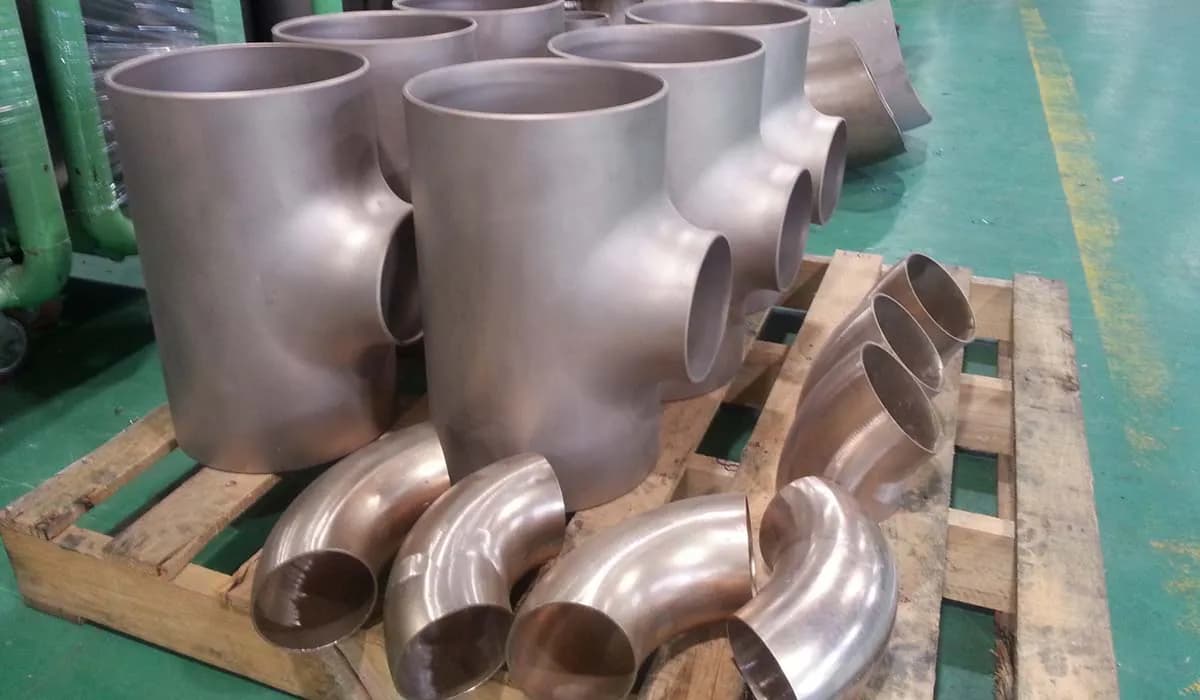
Fitting enquiries may include elbows, equal or reducing tees, concentric or eccentric reducers, caps, stub ends and crosses, plus forged socket-weld or threaded couplings, unions, nipples and branch forms. Separate wrought and forged product routes and define schedule, wall, end preparation, class, material and examination requirements.
Material priorities
The family order reflects the location's common procurement context, not a recommendation for any specific line. Project engineering must approve the exact grade and product specification.
Stainless Steel
Match the grade to temperature, chlorides, process chemistry, cleaning regime and fabrication needs. Product-form standards differ between forged flanges and wrought fittings.
Review material routeNickel Alloys
Consider exact corrosion chemistry, temperature, sour-service controls, fabrication route and approved product specification. Trade names are not a complete purchase description.
Review material routeDuplex Stainless Steel
Control the exact UNS grade, solution heat treatment, welding procedure, ferrite and corrosion-test requirements where the project specification calls for them.
Review material routeSuper Duplex Stainless Steel
Useful only when project engineering approves the grade for the chloride, seawater or severe-process duty. State the exact UNS, product standard and testing basis.
Review material routeBaytown, Texas applications
Each application introduces different material, dimensional, inspection or delivery questions. The city context helps organize the enquiry; it never replaces the approved project specification.
Interconnected process and utility systems require piping-class discipline and service-specific inspection.
Feedstocks, intermediates, cooling and chemical dosing create different corrosion and material-selection contexts.
Skid, utility and fabricated-equipment packages may combine standard and drawing-controlled components.
Project-defined hydrogen, carbon-management or lower-carbon systems still require conventional code and material verification.
Steam, condensate, air, water and treatment systems need temperature, pressure and chemistry controls.
Replacement geometry, outage schedule, submittal review and package-level traceability shape the RFQ.
RTI product and inspection evidence
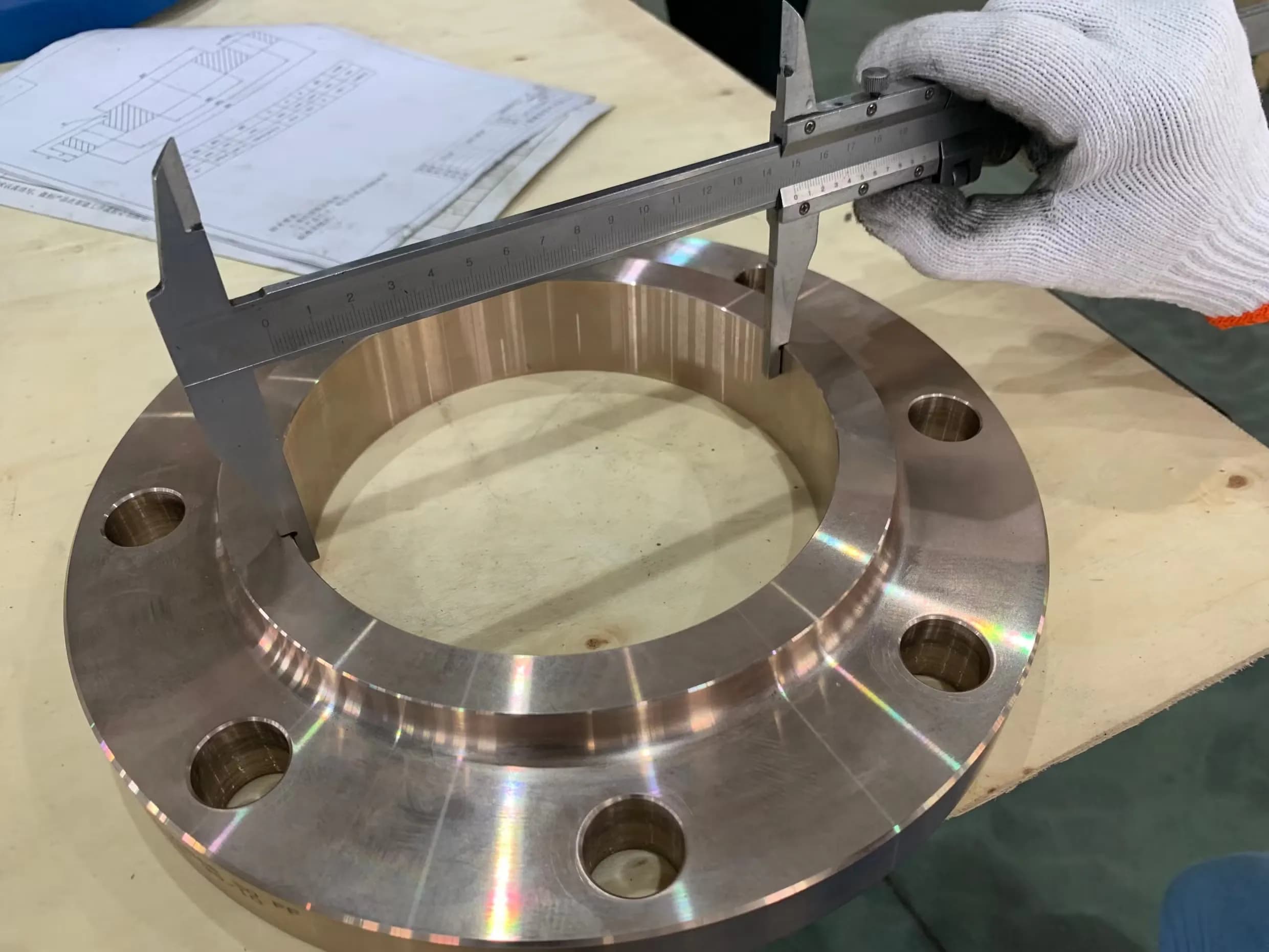
Genuine RTI photographs provide product and inspection context. They do not represent a local Texas facility, inventory position, project shipment or customer installation.
Standards and specification basis
These standards are common procurement routes, not a statement that every grade, class, size or form applies to every service. The approved project documents remain controlling.
Use the project-specified edition for applicable flange sizes, pressure classes, dimensions, bolt patterns and facings. Large-diameter requirements need their own approved dimensional basis.
Factory-made wrought butt-welding fitting dimensions must be ordered with the correct material specification, schedule or wall thickness and end-preparation requirements.
Forged socket-welding and threaded fittings require a stated class, end connection, dimensional edition and matching forged-material specification.
Orifice flange enquiries should identify the specified standard, pressure class, facing, taps, bore, assembly details and any project drawing or meter-run requirement.
Common routes include ASTM A182 for applicable forged stainless or duplex flanges, ASTM A403 or A815 for wrought fittings, and ASTM B564 or B366 for specified nickel-alloy products. Confirm the exact grade and form.
Inspection and release
Testing, inspection, documentation, marking and release requirements should be agreed before production or sourcing starts.
Define the certificate basis, heat-number transfer, component marking and document-review sequence in the purchase order. The certificate, marking and supplied grade should form one controlled traceability record.
State whether PMI is required, the sampling extent, acceptance method and report format. Alloy identity checks do not replace the full chemical, mechanical and heat-treatment requirements of the material specification.
Identify reportable dimensions, tolerances, facing finish, bore, wall thickness, bevel, bolt-hole pattern, marking and visual acceptance criteria. Drawing-based components require an approved revision.
Third-party inspection, NACE-related requirements and intergranular-corrosion testing should be specified only where the project requires them, with the agency, hold points, method and acceptance criteria agreed before release.
Related Texas routes
Use descriptive links to compare neighboring industrial contexts, then move into the relevant product, material, quality and RFQ pages.
Baytown, Texas procurement FAQ
Baytown, Texas technical quotation
Share material and UNS, product form, size, class or schedule, facing or connection, standard, quantity, MTC, PMI, NDE, TPI, packing, required date and the exact Baytown, Texas delivery destination.
Technical quotation desk
Send us your material grade, size, class or schedule, quantity, and specification.