
Flanges
Specify WNRF, WNRTJ, SORF, blind, socket weld, threaded, lap joint, long weld neck, orifice or RTJ form with class, facing, bore, gasket interface and owner requirement.
View product engineering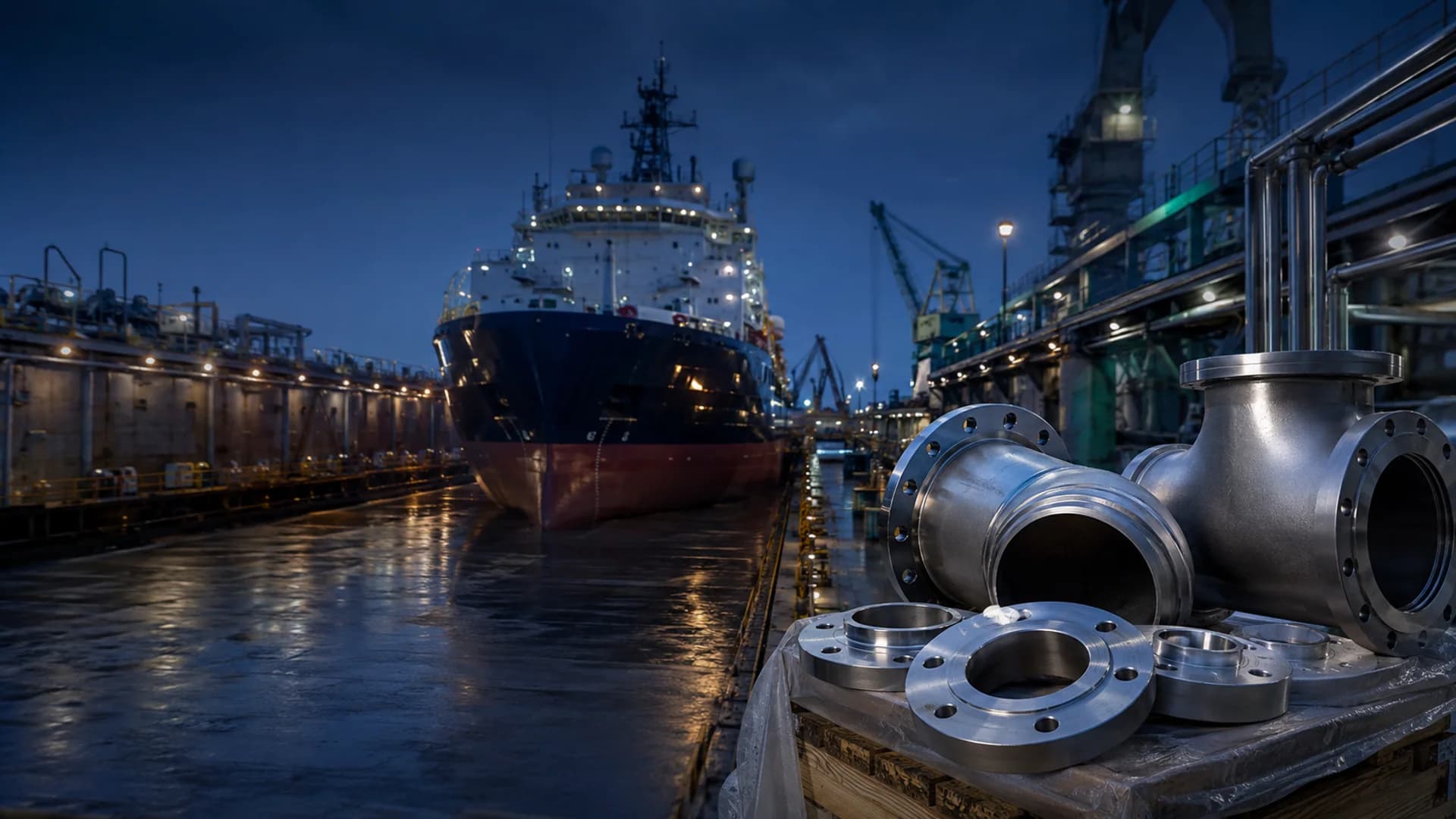
Dubai Maritime City marine component supply
Corrosion-resistant component definition for ship repair, shipbuilding, seawater systems, marine utilities and offshore-support packages.
Area-specific procurement
Raymond Tube Industries supplies specification-led flanges and pipe fittings for buyers and engineering teams serving Dubai Maritime City's marine cluster. This page prioritises Super Duplex and corrosion-resistant nickel alloy routes for project-approved seawater, cooling-water, ship repair, shipbuilding, offshore-support and marine-utility requirements.
Dubai Maritime City identifies its industrial precinct with ship repair, yacht manufacturing, marine suppliers, workshops, warehouses and technical services. Requirements can range from standard utilities to demanding seawater, cooling-water, ballast, scrubber, exhaust-support and offshore package duties. Fluid, temperature, pressure, chlorides, velocity, crevices, welding and owner specifications all influence material selection.
The page places Super Duplex first, followed by nickel alloys, stainless steel and Duplex 2205. That reflects the marine procurement context, not automatic approval. A 316L utility fitting, Monel 400 component, Inconel 625 interface and S32750 flange each need a distinct material standard, product form, heat treatment and inspection plan.
Material range
The listed grades are enquiry routes. Final material suitability remains subject to actual process conditions, project standards and engineering approval.
S32750 / F53 and S32760 / F55 may be specified for demanding seawater or chloride-bearing systems, subject to heat treatment, corrosion testing, fabrication and project acceptance.
Inconel 625, Monel 400, Hastelloy grades and other exact alloys may enter marine, scrubber, chemical, thermal or dissimilar-interface specifications.
316/316L and other stainless grades can suit defined marine utility duties, but chloride exposure, stagnation, cleaning and crevice conditions must be assessed.
S31803 or S32205 / 2205 may be considered for approved water and utility duties with grade, heat treatment and weld controls maintained.
Product scope
Marine repairs often combine new components with existing pipework. Confirm geometry from the approved drawing or piping class and do not assume nominal size guarantees fit-up.
Specify WNRF, WNRTJ, SORF, blind, socket weld, threaded, lap joint, long weld neck, orifice or RTJ form with class, facing, bore, gasket interface and owner requirement.
View product engineeringSpecify 90-degree or 45-degree elbows, equal or reducing tees, concentric or eccentric reducers, caps, stub ends, crosses, socket-weld or threaded forged fittings with schedule, end preparation, material grade and weld context.
View product engineering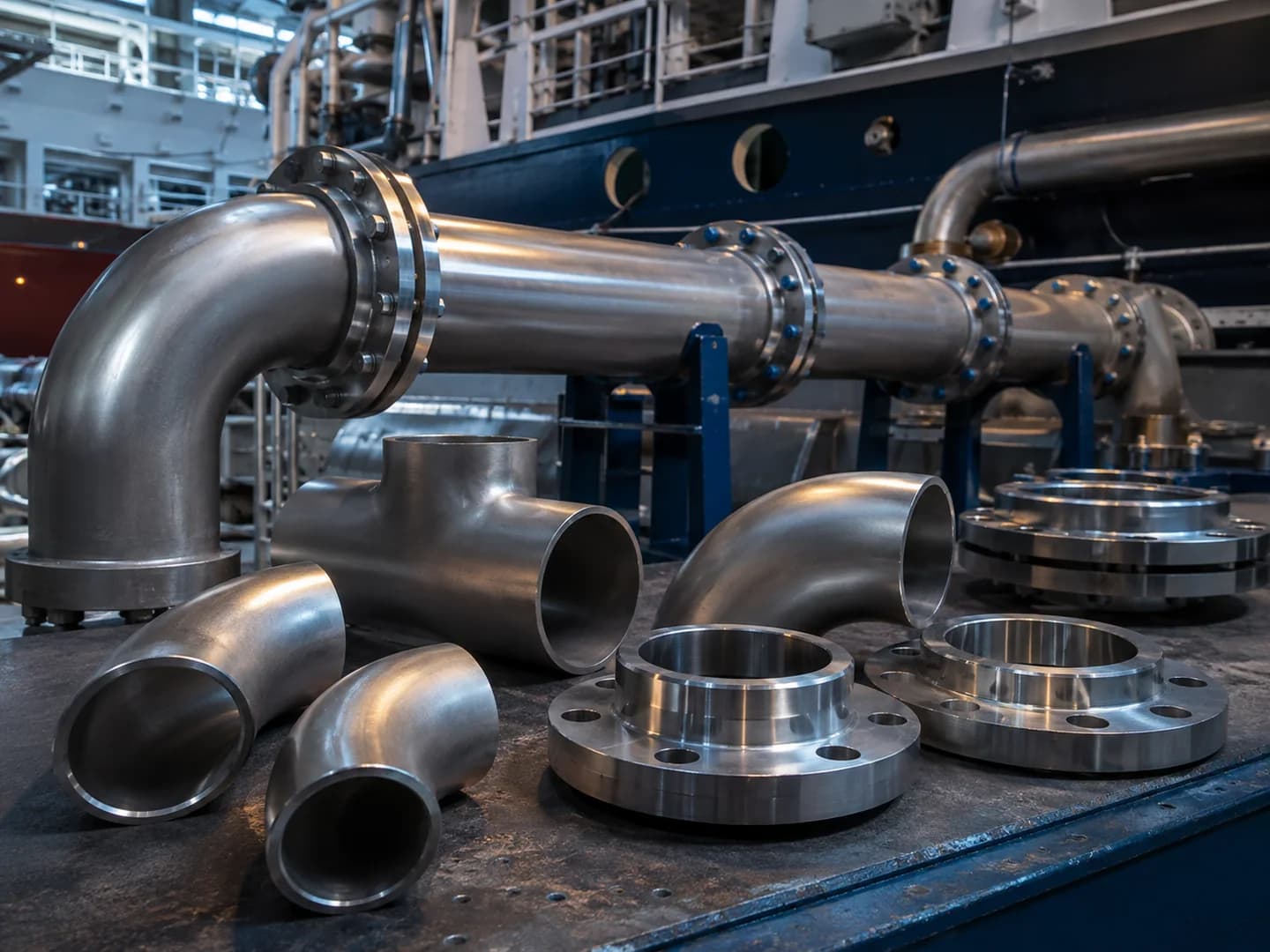
Operating environments
Replacement items need field dimensions, material evidence, line duty and drawing approval to avoid unsuitable substitutions during docking.
New-build packages require coordinated material lists, owner or class documents, weld procedures and staged inspection.
Chlorides, temperature, velocity, aeration, stagnation and crevice exposure should inform the approved alloy.
Ballast, firewater, drains, compressed air and service-water systems carry different pressure and corrosion conditions.
Skids, vessel packages and repair scopes may require Super Duplex or nickel alloys with PMI and project traceability.
Intake, pretreatment, salinity and chemical dosing require service-specific review rather than a generic marine-grade label.
Engineering context
Seawater exposure varies between flowing, stagnant, aerated, warm, creviced and chemically treated conditions. Material selection must consider the actual profile, fabrication details, gasket interface and inspection criteria. Higher alloy content does not remove the need for correct heat treatment and welding.
For repair work, send existing markings, dimensions, mating pipe and the approval route. For new builds, submit the piping class, bill of materials, owner or class specification, document index and inspection plan.
Procurement concerns
Inspection and documentation
Standards and buyer guidance
Flange dimensions, pressure classes and facings for the applicable range.
Dimensional basis for factory-made wrought butt-welding fittings.
Material route for specified nickel alloy forgings and flange products.
Material route for specified wrought nickel and nickel alloy fittings.
Certificate and traceability expectations when specified.
Positive Material Identification planning and report controls.
Dubai Maritime City RFQ
For replacement work, attach photographs, old markings, measured dimensions and the repair schedule. For new builds, attach the piping class and approved bill of materials.
Related technical routes
Return to the Dubai industrial-area directory.
Review marine corrosion and inspection considerations.
Connect alloy selection to the seawater duty.
Review the S32750 material route.
Review the separate S32760 route.
Review alloy flange forms, material routes and inspection inputs.
Review wrought and forged nickel alloy fitting requirements.
Define stainless flange form, class, facing, bore and grade.
Define stainless fitting geometry, wall schedule and ends.
Review Duplex 2205 flange procurement controls.
Review S32750 and S32760 product routes.
Plan MTC, PMI, inspection, TPI, marking and release records.
Send the complete component and Dubai delivery requirement.
Technical procurement FAQ
Dubai Maritime City technical quotation
Share the material and UNS, product form, dimensions, standards, quantity, inspection, documents, packing and Dubai Maritime City delivery context.
Technical quotation desk
Send us your material grade, size, class or schedule, quantity, and specification.